

There’s Something Between Us | The Science of the Healer-Patient Connection at Harvard
Listen Now
Listen on your favorite podcast platform



About Episode Five
What happens in the space between a healer and the person they're healing? Is it technique? Trust? Belief? Or something science is only beginning to measure?
We begin with Laurie Nealon, an energy healer in Massachusetts, and Alan Brown, from Brisbane — lifelong friends who hadn't seen each other in years when Alan's family came to visit. Over dinner, Laurie saw something in Alan she recognized immediately. What followed was a 20-minute kitchen table healing session that Alan describes as the most paradigm-shifting experience of his life: fire through the top of his head, a thousand volts releasing through his heart, and the sudden sense of something he hadn't felt before. Connection. Love. The coping mechanisms he'd relied on for years fell away. His practice transformed.
Their story opens a question that takes us to two of the most rigorous researchers in the field. At Dartmouth, neuroscientist Tor Wager argues that the relationship, the belief, and the felt sense of being truly seen are not noise in the data — they are the data. At Harvard, Vitaly Napadow built a study to prove it: simultaneous brain imaging of clinician and patient in separate MRI machines, connected by live video, at the exact moment of treatment. His team found that the pairs whose brains showed the strongest synchrony achieved the greatest pain relief. The connection itself was part of what was healing them.
Science has found the instrument. It just hasn't found everything that plays through it.
Music composed by Dan Baboulene. Learn more and find resources at phenomenahealing.com.
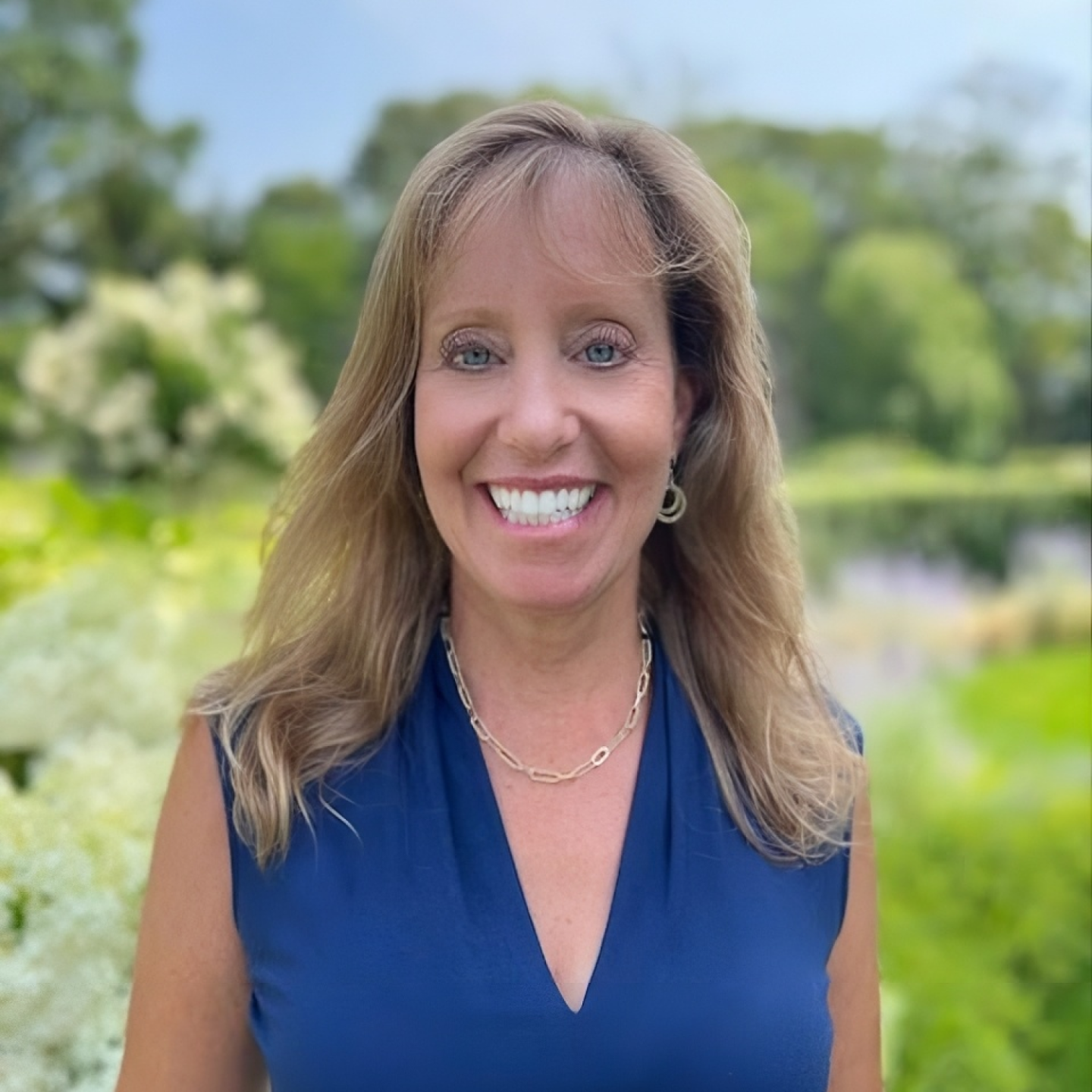
Laurie Nealon
Energy Healer & Educator
Laurie Nealon is a gifted intuitive, medium, energy healer and educator. With over 15 years of experience, she works with hundreds of clients across the U.S. and abroad. Laurie provides in-person as well as remote sessions.
Clients seek Laurie’s expertise for a variety of reasons. Often, she addresses physical illness ranging from cancer to chronic pain. Clients also seek support in navigating current and past life journeys or dismantling old belief systems. Still others work with her to release emotional trauma, to address diminished self-love, to relieve depression, stress or anxiety, or to connect with loved ones who have passed.
Strengthening love and divine connection for others is Laurie’s greatest passion! As a result, many people are drawn to Laurie’s practice because they are seeking guidance on their own spiritual journey. She guides and supports clients as they attain their highest potential in connection with the divine. With her professional experience and years in education both as an elementary teacher and college supervisor, she is uniquely qualified to teach. For over 10 years, she has trained countless people in various energy healing modalities including Integrated Energy Therapy® (IET®). She has created multiple healing teams and continues to lead and facilitate group healings serving a wide variety of clients.
Laurie has always received messages from the other side, whether it be through dreams, visions or psychic knowing. She was quickly propelled down a path of powerful channeling and healing work. Her goal is to help her clients come into their own alignment with spirit and self. From there, joy and peace will follow.
Laurie speaks with humility and love when reflecting on her work. “It is an honor to help clients heal and to see them take ownership over their own healing power. It is also deeply meaningful to support fellow healers on their journey as they align with divine love and light. This is my passion. This is my life’s work.”
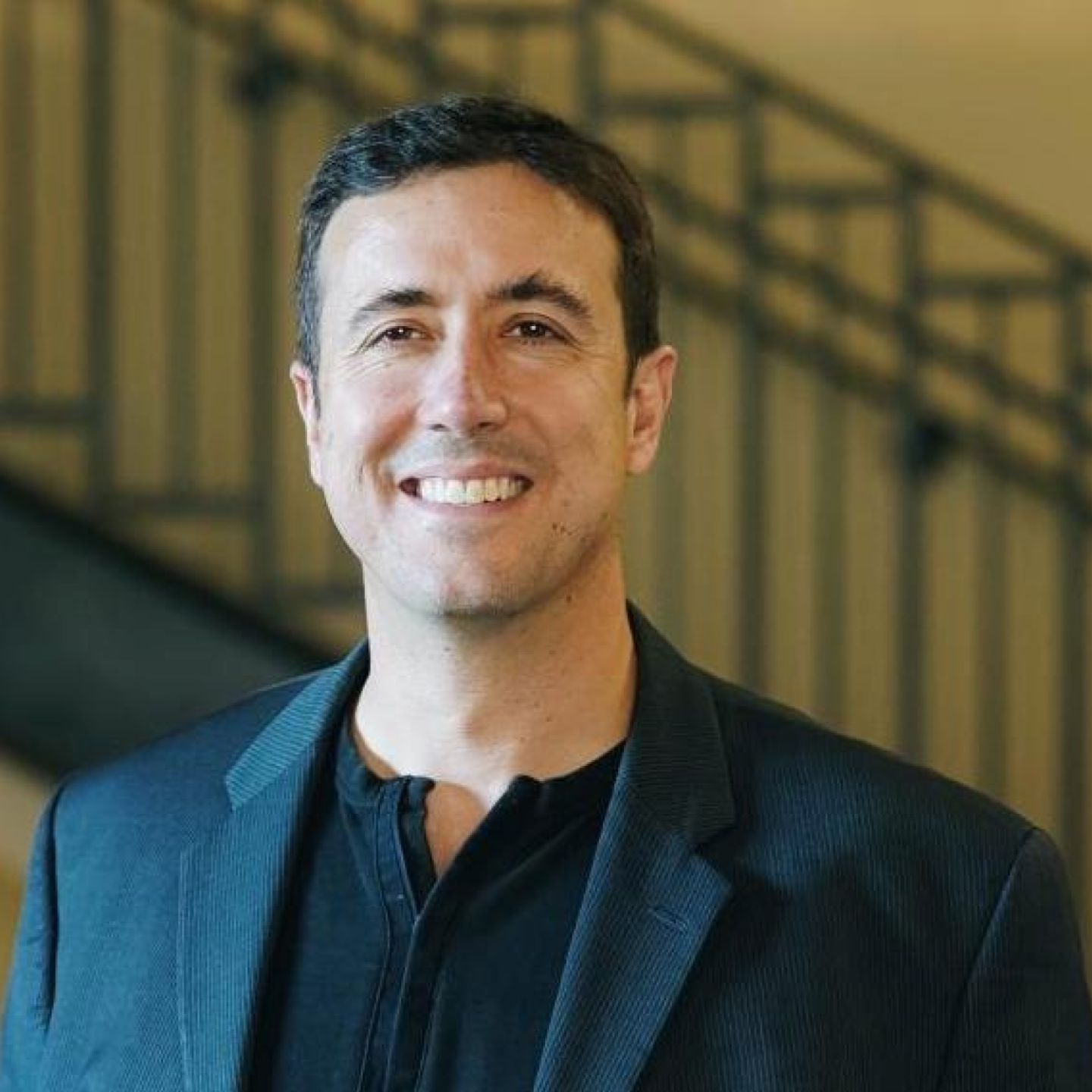
Tor Wager, PhD
Distinguished Professor at Dartmouth College
Tor Wager is the Diana L. Taylor Distinguished Professor in Neuroscience at Dartmouth College, and the Director of Dartmouth’s Cognitive and Affective Neuroscience laboratory, the Dartmouth Brain Imaging Center, and the Dartmouth Center for Cognitive Neuroscience. Professor Wager’s research centers on the neurophysiology of affective processes—pain, emotion, stress, and empathy—and how they are shaped by cognitive and social influences. One focus area is the impact of thoughts and beliefs on learning, brain function, and brain-body communication. Another focus is the development of brain biomarkers that track and predict affective experience, including pain and other clinical symptoms. A third focus is on statistical, machine learning, and computational techniques that provide a foundation for new models of the affective brain. Professor Wager’s laboratory conducts basic research in these focus areas and applies the resulting techniques and models to collaborative, translational research on clinical disorders and interventions. In support of these goals, Professor Wager and his group have developed several publicly available software toolboxes (see http://canlab.github.io). He also teaches courses and workshops on fMRI analysis and has co-authored a book, Principles of fMRI. More information about Dr. Wager and his lab’s activities, publications, and software can be found at http://canlab.science.
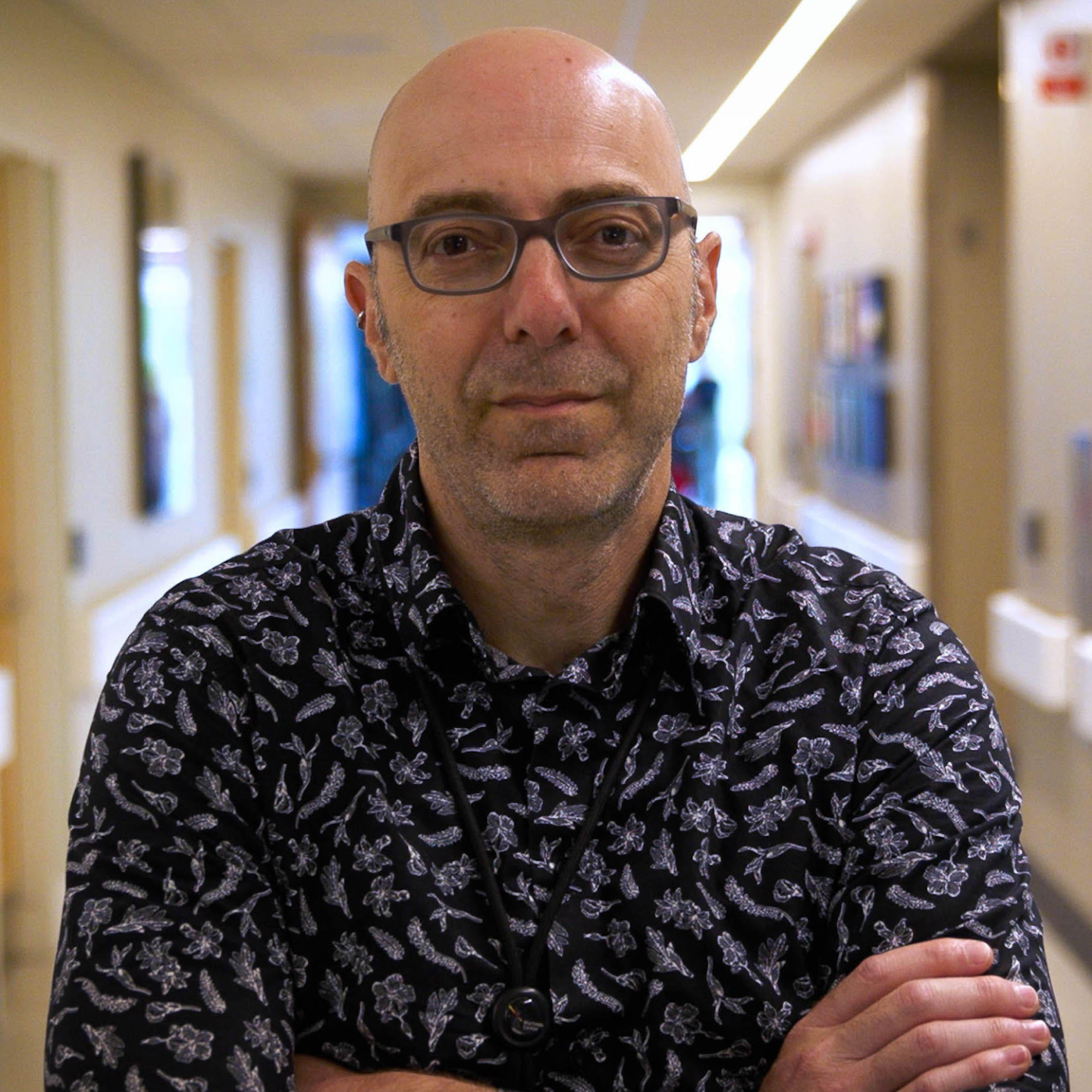
Vitaly Napadow, PhD
Harvard-Mass General Research Institute
Vitaly Napadow is Professor of Physical Medicine and Rehabilitation at Harvard Medical School. He is also the Director of the Schoen and Adams Discovery Center for Chronic Pain Recovery at Spaulding Rehabilitation Hospital and the Center for Integrative Pain Neuroimaging (CiPNI) at Massachusetts General Hospital. Dr. Napadow has more than 250 publications, is past-President of the Society for Acupuncture Research, and is a Fellow and founding board member of the US Association for the Study of Pain (USASP).
Join the Community
For exclusive access to the latest research, resources and stories transforming how we experience healing.
Phenomena – Episode 05
Original Airing: 7/7/2026
Produced by Sounds True Studios.
Music composed by Dan Baboulene.
“There's Something Between Us | The Science of the Healer-Patient Connection at Harvard”
Vitaly Napadow
I think there is something that's being transferred and something that's happening. What that is, we don't know. That still, I think, has to be researched. This connection — this social connection between healer and healee, between patient and clinician — that is an important neurophysiological element as well, and part of what we might call the placebo effect, what we might call energy healing.
Ivy Ross:
We are in a time of convergence. Throughout history, almost every culture in the world has used what we now generally call energy healing to help ease suffering. But modern medicine pushed these practices, these phenomena, to the margins. And stories of energy healing became just that — stories.
I'm Ivy Ross, and as a business leader and artist, my life has always been about navigating these two very different worlds. The solid ground of hard data and the undeniable power of the invisible.
At heart, I'm a child of wonder. I'm curious about the forces that connect us all, and so I invite you to join me as I explore this new frontier in medicine and healing with astonishing stories, compelling science, and an open mind and heart.
This is Phenomena, The Science And Stories Of Energy Healing.
Something happens in the space between a healer and the person they're healing. Something that isn't just technique, or trust, or belief. What is that something? I've been thinking about this ever since we started this podcast, because every healer we've talked to describes it in a similar way — not as something they do to someone, but as something that moves through them.
Between them. A connection that's at the center of the healing. There's a word that sometimes gets thrown at that connection: placebo. It's worth saying plainly. Yes, belief is powerful Relationships are powerful. Feeling truly seen by another person is powerful. We know that. We have research that shows it. But I think placebo is too small a word for what we're about to hear.
There's a researcher at Harvard who built a way to scan two brains at the same healing moment and found something that neither brain knew was happening. But first, I want you to meet Laurie Nealon and Alan Brown — two people who have been friends for more than 30 years, and who live about as far apart as two people can.
Laurie Nealon:
My name is Laurie Nealon and I am in Massachusetts. I'm an energy healer and I have a practice where I work one-on-one with clients, both in person and remote. I also have trained lots of people in Integrated Energy Therapy, IET. We do group healings and things like that as well. This work has kind of gone off and branched off in lots of different directions, which has been super exciting.
And I'm here with my longtime friend Al Brown from Australia.
Alan Brown:
Thanks, Laurie. My name's Alan Brown. I've been a chiropractor for close to 30 years. I met Laurie many years ago on campus at our college in Brisbane, which is where I live now, and I have a practice there.
Ivy Ross:
They sat together and talked with us about the time Alan came with his family to visit Laurie in the States. And what happened during that visit that changed Alan's life forever.
Laurie Nealon:
When they came over, that first night they started asking me, "Now tell us about what you do." Al knew nothing. I just kind of shared my whole story and he's sitting across the table from me and he's looking at me and he's like, "Oh my gosh, I need to have a healing with you." And he said, "I don't know." I said, "Yes, you do. There's something stuck in the top of your head. We need to clear that up."
Ivy Ross:
Alan is a chiropractor — grounded, holistic, deeply familiar with the body. Laurie practices Integrated Energy Therapy, working with what she describes as the body's energy field. They are two healers with very different approaches. And Laurie saw something in Alan right away.
Laurie Nealon:
I'll see energy on people all the time, so I know where people's blocks are, or there'll be loved ones that are coming through showing me different things. That's just my life — it's all the time.
With Al, it was literally showing me there was darkness on the top of his head. It wasn't on his physical head, it was in his energy field, probably in that eighth chakra. And they were showing me that almost beyond that block was the light. And I'm like, this is somebody who is already intuitive, but has a potential to be so much more intuitive and connected, and he's absolutely blocking the way.
Alan Brown:
I guess I felt like there was a block there, but I didn't really know exactly what that was or what that looked like. She did say that she thought I had a block on the top of my head, and that makes sense now. I didn't have anything particularly wrong — I just felt like I needed to have an energy healing.
Ivy Ross:
At the time, Alan wasn't sick. He wasn't suffering, at least not that he knew.
Alan Brown:
I would manage my stress with alcohol. And I was holistic, you know, and I'd say I was sort of anti doing medical drugs to try and treat symptoms. But on the other hand, I was managing my stress — I might have alcohol, and I was trying to use cannabis in some sort of healthy way to manage my stress.
Ivy Ross:
So Alan was doing what a lot of people do — finding ways to manage, getting on with things. And then, sitting in a friend's kitchen on vacation, something shifted.
Laurie Nealon:
So the initial energy healing on him was really profound in the sense that it shifted everything. It really opened up his spiritual connection.
Alan Brown:
We were sitting about here. And I remember, I could just feel her hands there. And I felt like I'm in just the normal reality, and then all of a sudden it wasn't, and that shift was like this profound awareness. She had talked about this block that she saw in me, and all of a sudden I felt connected — I could feel like it was like fire on the top of my head.
And that connection was so, so overwhelming, and I was so grateful to have it. Then she laid me down on the table and she started healing, putting her hands in my heart area. It felt like a thousand bolts going through my heart, releasing this block in my heart that I didn't even really know was there. And it just took off this weight off my heart.
Ivy Ross:
And imagine this is all completely unfamiliar and unexpected for Alan. Whatever he thought a healing might feel like, energy tearing through him like a thousand bolts of electricity probably wasn't it.
Alan Brown:
I just couldn't believe what was happening. It was just nothing that I thought was even possible. And it was chaotic because I had this crazy analytical mind that was trying to control everything. So I had this extreme flow of new information and this crazy analytical mind, and it took quite some time to really start to integrate that.
Laurie Nealon:
His brain would keep getting ahead of him. And I just keep saying to him, "Just let it unfold. The divine is guiding you, just let it unfold." But, you know, we all get in our heads — we want to know exactly how it's gonna unfold and exactly what we're supposed to do.
Ivy Ross:
And then mid-session, one of Laurie's kids opens the door.
Alan Brown:
So she's doing this healing. I'm having the most mystical, earth-shattering, paradigm-changing experience in my life. One of the kids opens up the door and goes, "Blah blah blah, Mom." And she does the mother conversation back — like, "Pass the salt" — and back to the healing. I'm like, what is going on? That's not reality here. I'm like crying, and it's just another day in the office for Mom.
Laurie Nealon:
It was a powerful healing and it was a very quick healing. The whole thing was only like 20 minutes long. And he walked out of my kitchen — my parents were here as well — and he walked out of the kitchen, put his head on my mom's shoulder, and he just sobbed. And they all looked at me and said, "What did you do to him?"
Ivy Ross:
Something had come open inside of Alan — something he didn't know was closed.
Alan Brown:
I mean, it was like I didn't have symptoms. I would say that I always had a spiritual yearning, but I don't know — it was limited by, it was more like an analytical thing where, you know, you sort of did this prayer thing, and prayer's a wonderful thing, but for me it wasn't like an experience. The whole healing thing shifted that. And that's kind of how I would explain to people why I love energy healing — it's now, particularly, this sensory experience. It's such a confirmation of guidance, and you physically feel it come into your body, where I just didn't have that at all before.
Ivy Ross:
And when that came into Alan's body, what did it feel like? It's a hard thing to put into words, but then Alan found one word that summed it up perfectly.
Alan Brown:
How would I explain it? It's the feeling of — you have those moments where you love someone, you love a moment in time, you're passionate about something, and there are these moments in your life where you feel that in your heart. And when it first comes in, it's kind of not normal to feel this sort of flow of — to me it wasn't, because I had a massive block there. And then bit by bit it just started to grow more and more.
Ivy Ross:
Hard to put into words, but not impossible. It's love. Meanwhile, the conduit for the flow of all that love and healing energy was sitting right beside him, smiling. And she added another word to the experience that happened between them.
Laurie Nealon:
It's true joy. It's true joy, is what you're experiencing when you're in that flow, right? Because the head gets out of the way and you experience that feeling of true joy. And that is such a confirmation — whether it's physical healing, mental healing, emotional healing, spiritual healing — it is that true joy. And then it's that desire to be in alignment with that. I use the expression "divine love and light" — that's what we want to be in that flow with, and that is source energy. That's where healing comes from.
It's amazing because the energy comes through us as a conduit to the client, and so I always say when you're giving a healing, you're receiving a healing. Because that flow of energy is going through you. So it's an incredible space to be in.
Ivy Ross:
After the healing, Alan says the self-medicating stopped, because the thing underneath it was gone. He describes it as spiritual pain. Once that lifted, he didn't want anything dulling the connection he'd found. And professionally, something opened up too.
Alan Brown:
After the healing happened, I got trained in energy healing with Laurie. I started practicing energy healing — it just kind of evolved into my chiropractic practice. That was one of those things: when all this opened up for me, I kind of thought, am I supposed to do this separately? How am I supposed to do this? So I just became more of what I was doing really. I started doing energy healing as a chiropractor. My learning with that was: I feel like anyone can bring energy healing into their particular part of their life.
Laurie Nealon:
It's been profound. I mean, he went from just the chiropractic practice to now integrating energy work into his chiropractic practice constantly, to training tons of people in IET, doing all of these group healings, having this amazing healing team. So everything has gone so quickly. It's been so fun to watch.
It is incredible to be able to be in that place — with Al, or with any of my clients — to be in that space where somebody's opening their soul and their journey to you, to be in that space of healing with them, is honestly the greatest honor. You know, people say all the time, "Oh my gosh, this is amazing," and I turn right back around and say, "Thank you. This is such a joy to be able to share this space with you."
Ivy Ross:
Healers talk about space a lot. Creating space. Sharing space. Carl Jung famously once said: the meeting of two personalities is like the contact of two chemical substances — if there is any reaction, both are transformed. And when we talk about the space between a healer and their client, I can't help but wonder what's actually in that space. What is passing between two people when one of them gets better? As it turns out, a researcher at Harvard has spent years trying to find out.
I want to go back to this question that comes up over and over. What is actually causing the healing? Is it the technique? Is it the relationship? Is it belief? Or is it something larger — something we don't yet have the instruments to measure? A researcher at Dartmouth has spent much of his career trying to find that answer.
Tor Wager:
I'm Tor Wager. I am a professor at Dartmouth College and I run a lab that does brain imaging and psychophysiology of pain, stress, emotion, empathy, compassion — lots of things related to feelings, and how we generate them and how we regulate them with our brains and minds.
Ivy Ross:
What Tor has found over years of research is that something real is happening in this connection between healer and patient, and that its power is routinely underestimated.
Tor Wager:
Some of these forms of healing — like Reiki — are non-touch related, but really close interpersonal healing. I've heard about other forms of these things which are more distant. But a lot of these really involve a relationship. And what we've seen from placebo research and other research on psychosocial treatments is that those processes can be much more powerful than you think.
Ivy Ross:
And I love the image Tor uses to help explain this.
Tor Wager:
In many cases, drugs, for example, don't just do something to your mind and brain. They are like stones dropped into a very complex moving river. So you can imagine taking somebody who has a life that's devoid of hope, they have negative beliefs about the self and the world, and they're deeply depressed. And then you give them an antidepressant and say, does this thing alone make you better? And the answer is no. It doesn't change your life. It doesn't change your mind. It doesn't change the way you see yourself. It gives you a boost, maybe. It gives you something. But it's just not gonna work without the right kind of psychological support, without the placebo ingredients — which is really about saying: you can think about your life differently, you can think about yourself differently, here are some ways in which you can improve over time.
Ivy Ross:
Whatever the stone is — a drug, a needle, a healer's hands — it lands in a context that shapes everything that happens next. So when Tor talks about the ingredients of a healing encounter, he's not talking about tricks or illusions. He's asking a real scientific question.
Tor Wager:
We can contribute ways of understanding what are the mediators of those processes. So what are the things — when you have an interpersonal encounter with a healer — that are the ingredients that end up making the difference in the patient's wellbeing?
Ivy Ross:
That question has an answer, or at least the beginning of one. And it comes from a lab at Harvard where a researcher named Vitaly Napadow decided to stop asking what the treatment does and start asking what happens between two people.
Vitaly Napadow:
My name is Vitaly Napadow and I'm a professor of Physical Medicine and Rehabilitation at Harvard Medical School, and I'm the director of the Schoen and Adams Discovery Center for Chronic Pain Recovery at Spaulding Rehabilitation Hospital.
I've been very interested in non-pharmacological approaches to pain and pain recovery. Why do people suffer from chronic pain? How can we ameliorate their pain, and how can we help people manage and recover from their pain? Part of that is understanding the neurophysiology behind that.
My expertise is in neuroimaging. I'm a brain imager, and we use functional MRI, EEG, and other techniques to record and analyze brain activity from chronic pain patients.
Ivy Ross:
Vitaly started his career doing some of the first fMRI studies of acupuncture in the early 2000s. Acupuncture is one of the most widely known and accepted forms of energy healing. In fact, some people in the energy healing community don't consider it to be energy healing because the physiology behind it is so well documented. But as we heard in our previous episode on Qi, acupuncture is a method for transmitting and moving energy along the body's mysterious pathways known as meridians. Over time, Vitaly's research shifted away from what happens between needle and body and toward what happens between practitioner and patient.
Vitaly Napadow:
As part of my research, one thing I've been getting more and more interested in is the social part of what's called the Bio-Psychosocial Model for Pain, which basically posits that it's not just the biology that is contributing to pain and pain recovery, but also other aspects such as the affective dimensions of pain and also the social dimensions of pain.
The social dimensions of pain specifically have been really hard to understand, really hard to study from a neuroscience point of view. And so we've been trying to apply techniques such as hyperscanning neuroimaging to better understand the social dimension of pain. One thing we've been focusing on is the relationship between patients and clinicians.
Ivy Ross:
So a question that comes up for me is: how do you scan a brain to measure a relationship?
Vitaly Napadow:
Hyperscanning neuroimaging really just means the simultaneous and synchronous brain imaging of more than one individual at a time. In this case, we have a chronic pain patient in one MRI scanner and a clinician in another MRI scanner. The two are connected — they're synchronized, collecting data synchronously — and there's transfer between the two with an audio and video link that's MRI compatible. So the patient can see the clinician, the clinician can see the patient, and the two are interacting in that way.
Ivy Ross:
Two MRI machines running simultaneously, linked by a live video feed. That is quite a setup. And if you're not familiar with them, MRIs are incredibly noisy. So how does that work?
Vitaly Napadow:
It is quite noisy. I completely agree. And so while we're collecting the data, they're relying more on visual contact and visual cueing. So it's a controlled experiment. It's not a freeform conversation that they're having.
Ivy Ross:
In the experiment, there's another complicated setup that allows the clinician to administer acupuncture to the patient while they're each in separate MRI machines. And that allows Vitaly and his team to monitor and compare the brain signals from both of them at the same moment of the treatment.
Vitaly Napadow:
So when we're collecting our fMRI or EEG signals, we're assessing what's called brain-to-brain concordance — how does the brain signal in one individual relate to the brain signal in the other individual? And if those two things are then related to either therapeutic alliance or to analgesia and the clinical efficacy of what the clinician is doing, we see that as being very important.
Ivy Ross:
You've heard us talk about therapeutic alliance before, but I think Vitaly's definition is worth hearing.
Vitaly Napadow:
You can think of it as: are the two individuals consistent and resonant with one another? Does the patient feel like the clinician is really caring about them as an individual, as a patient? Or is the clinician too busy, just running between patients and not able to really make that connection? That connection is critical. That connection is really important, and there's been a lot of research that has shown that how connected the patient feels to their clinician impacts clinical outcomes.
Ivy Ross:
It sounds subjective or even emotional. Do you feel like your doctor cares about you? How in the world do you measure that? How do you quantify caring? That's what Vitaly's team has done — in a way that is objective, controlled, and high-tech.
Vitaly Napadow:
When we designed the study, we weren't originally planning on doing this kind of analysis. But then what we realized is that as we had clinicians in one scanner and patients in the other scanner, and we were collecting the video data from each, we were actually saving that video data. At some point during the course of the study, more tools started to come out — these artificial intelligence approaches to read facial expressions and study faces in a very quick, automated way. In theory, unbiased — an objective assessment of facial expressions.
Ivy Ross:
They fed all of these recordings into AI to analyze and compare the facial expressions of the clinicians and patients at scale. That led to not just one, but two eye-opening discoveries.
Vitaly Napadow:
We passed our videos through those algorithms and what we found is that there was a mirroring of facial expression between patient and clinician.
Ivy Ross:
They were mirroring each other. Subtle, split-second responses that most people would never notice. A subconscious attunement passing back and forth that might be creating what we've been calling a healing space — and the algorithms had spotted it. But the second discovery was even more striking.
Vitaly Napadow:
What we did is take some of that data to these causality algorithms. One is called Granger causality. Basically, what that's doing is testing the direction of the transfer. Is the mirroring you're seeing between patients and clinicians the patient mirroring the clinician's facial expression? Or is it the clinician mirroring the patient's facial expression? What's the directionality of it?
What we found is that it was usually the clinician mirroring the facial expression of the patient. And that's really interesting, because what that showed us is that the clinicians in our studies were really trying hard to make that connection.
Ivy Ross:
The clinician is reading the patient, tracking them — not the other way around. And nobody told them to do this.
Vitaly Napadow:
We didn't instruct our clinicians to mirror the facial expression of the patients. We didn't instruct the patients to mirror the facial expression of their clinicians. This was all happening automatically.
Ivy Ross:
And then the finding that ties it all together.
Vitaly Napadow:
It was specifically the temporal parietal junction — and the brain-to-brain concordance in the temporal parietal junction response in both patients and clinicians — that was linked to analgesia. In those dyads — we call them dyads, when you have a patient and a clinician together — in those dyads that had stronger brain-to-brain concordance in this specific part of the brain called the TPJ, or temporal parietal junction, those dyads experienced better analgesia from the acupuncture.
Ivy Ross:
The TPJ is the part of the brain associated with understanding another person's inner experience — not just feeling what they feel, but modeling it, making sense of it from the inside. The pairs where that understanding ran deepest, whose brain signals were most in sync with each other, were the pairs where the patient felt the most relief.
The connection itself was part of what was healing them. And there's one more finding I want to share.
Vitaly Napadow:
What was really interesting is that the clinician's brain was more strongly activated than the patient's brain. The clinician is just experiencing their patient experiencing the pain — they're not experiencing pain themselves. So that was really fascinating.
Ivy Ross:
This reminded me of what Laurie said: when you're giving a healing, you're receiving one too. I asked Vitaly where all of this sits relative to the bigger questions — Qi, energy, consciousness, the things energy healers and acupuncturists have been describing for centuries.
Vitaly Napadow:
I get asked this question all the time. What is Qi? How are you measuring Qi with your fMRI? Are you measuring Qi with your EEG? And I say no — we don't have a way yet to really measure energy and to try to understand what it is, this concept that we call energy or that we call Qi. And that's something that needs attention. Do I think that this concept called Qi is something that's important to acupuncture research? Very likely. But I do not have a Qi meter.
I think there are dimensions beyond somatosensory sensation, beyond visual facial mirroring, beyond some of these things we've talked about, that are also part of this transfer. I think there is something that's being transferred and something that's happening. What that is, we still don't know. I think it does happen on multiple levels.
Ivy Ross:
So what has the science actually found in the space between a healer and the person they're healing?
It's found that the connection is real and measurable. That two nervous systems, linked by a video feed across two MRI machines, synchronize in ways neither person is aware of. That the clinician's brain works harder to understand what the patient is going through than the patient's own brain works to experience it. And that when synchrony is strongest, so is the healing.
Science has found the instrument. It just hasn't found everything that plays through it.
If you want to go deeper on what's actually happening in the brain during these moments, go to phenomenahealing.com, where you'll find an extended clip from Vitaly about a concept called Theory of Mind, and what it tells us about why some healing relationships work and others don't.
Okay, as I always do, I want to bring my friend and research partner, Meredith Sprengel, to help me think through what we just heard. As you know, Meredith is the research and program director for the Subtle Energy Funders Collective and a PhD candidate in cognitive psychology at Leiden University. Meredith, welcome back.
Meredith Sprengel:
Thanks, Ivy. I'm super excited about the conversation we're going to have. This episode is one of my favorites.
Ivy Ross:
You say that about all your episodes.
Meredith Sprengel:
No, I know, but it's so exciting. I love all of this research and all the people involved are really wonderful.
Ivy Ross:
That is true. So before we get to the research, let's just touch on Alan's story. He wasn't sick, he wasn't looking for healing, and then something opened up in him that he didn't even know was closed. What do you make of that?
Meredith Sprengel:
It's really fascinating, and it's really interesting to think about it in the course of someone's life. When is someone ready for healing? When do they feel — there are all these conversations about what makes someone ready. And I think in this context, what makes it interesting is there was kind of an inner knowing or an inner wisdom that pointed him to this healing experience. I'm wondering what you think, Ivy.
Ivy Ross:
I've had the same experience. I think, as you're saying, we should always follow our instinct. I'll hear about a healer or meet a healer, and consciously there was nothing I felt I had to work on, but I felt a kinship with that person, booked a session, and sure enough, some things came out.
Meredith Sprengel:
Exactly. And we are always healing, right? There's no end to healing. Our whole life is a healing journey. And therefore, when you have those moments of inner knowing — or, "for some reason I really want to talk to you" — it can be interesting to see what happens when you follow them.
Ivy Ross:
Clearly Alan and Laurie were both in a very magical space — I can't believe she even had to pause to talk to her kid, and then went right back to the healing and it didn't miss a beat. Alan stayed in that state of mind.
Meredith Sprengel:
It makes me think of altered states of consciousness. A lot of healers say they don't remember what happens during a healing, and so she was able to stay in that flow even when she was having to interact with — was it her daughter? — whoever that was. It didn't really need to enter into her consciousness because she was in that flow state.
And even flow state research — which is a whole other area of non-ordinary states of consciousness — it's a similar state. I think they call it transient hypofrontality, where you're able to get into states that allow the self-monitoring to quiet and to be fully present. And when you're not self-monitoring, a lot of times you can't necessarily remember what was happening in that moment.
Ivy Ross:
Maybe I naturally understand this because of being a creative. When I'm deeply engaged in researching or trying to figure out a technique, using my hands and my mind, you lose all sense of time and you get into this flow state where everything else disappears. It's quite beautiful.
Meredith Sprengel:
Yeah. You get to just be, without thinking. There's something so beautiful about that — when you're able to stop the self-monitoring and almost let the ego go and just be present. And that in itself is healing. I'm sure when you're doing art, that's a very profound healing impact on you.
Ivy Ross:
Yeah. You don't realize you're still doing, but you're being. You're in the being state while you're doing, at an almost autopilot level. So it's the marriage of those two.
Meredith Sprengel:
Yeah. I'm going to joke, but that's kind of like when you're sometimes doing data analysis.
Ivy Ross:
Okay. Tor Wager uses this beautiful image of a stone dropped into a moving river — the stone alone doesn't change the river, it lands in context. Help me understand that statement. I have my own interpretation of it, but I'd love to hear yours.
Meredith Sprengel:
It hearkens to this other model of thinking about the body. There's a lot of new research in this concept of systems biology, and it's a way of thinking about the body as a complex set of systems that are interacting — always interacting, always changing — and subtle influences, the right subtle influences, can then affect the biological state in a positive or negative way.
Right now, most of medicine, you're taking a hammer to the system and just pumping it full of a drug, not necessarily thinking about the body as this kind of beautiful instrument. So to take back to his analogy: it's not just dropping any stone into the river, but dropping the right stone in the right place to keep the river flowing and healthy.
Ivy Ross:
I think what's important is also that he says the image of a stone dropped into a moving river — because we forget how dynamic we are. And as you mentioned, we're constantly changing all the time. So we have to take that into account. I want to talk about the brain-to-brain scans and the results that Vitaly shared with us.
Meredith Sprengel:
What I think is really great about all this research is it's starting to tap into something we all know — that a lot of times healing is happening on an unconscious level. And when we're interacting with people and it feels really good, there's actually something happening between us: we're mirroring our brains, our physiology, even our micro facial movements.
I think it's a fabulously interesting study. There was also another factor — they took an instrument that measured therapeutic alliance, and this was given right after they met the practitioner for the first time. They hadn't even delivered the acupuncture yet. And how strong the therapeutic alliance was actually had an impact on how strong the brain-to-brain concordance was. That's pretty obvious in retrospect, but it's very interesting because they filled that questionnaire out after like five minutes of knowing the practitioner. So there's something they just connect with that helps increase that brain-to-brain concordance, and then that predicted the pain relief. And it's a whole new field of research that is starting to disentangle all of these things that we haven't really understood and thrown into the bucket of placebo.
Ivy Ross:
So I would love to talk a little bit about placebo, because Tor says it's routinely underestimated — that the relationship and the belief and the context are real mechanisms, not illusions. But at some point, does calling something placebo start to obscure more than it reveals?
Meredith Sprengel:
100%. And Tor is right. I would argue the word placebo is becoming a bit of a scientific liability, because the word itself carries this sort of implication that placebo isn't real, that there's something not real about it. Which is kind of ridiculous, because when you look at the research, the placebo arms have real impacts, right?
And I think we had Natalie Dyer in an earlier episode say that it's something like 80% of the effect of an antidepressant can be placebo. So although it started as a control in clinical trials as a way to isolate the specific treatment effects, it is literally having a treatment effect. There's a paper just published in The Lancet that took all the different factors that have been thrown into placebo, and you get all of these contextual variables — like the therapeutic alliance, like the space where the healing happens, like the dialogue that happens between the practitioner and the patient. And then: are those all placebo elements, or are those some sort of complex set of dynamics that we need to understand in terms of how they're impacting treatment and how they're impacting the patient?
Not knowing a mechanism doesn't mean there is no mechanism. And I think that's kind of why we're so interested in energy healing — because it gets thrown in this bucket of placebo, and there are all these contextual factors that make up placebo, and then science just says, "Oh, well, they're just amplifying the effect of the treatment." And they get thrown into a bucket of, "Well, it's not real."
Ivy Ross:
I think because we're so used to hearing "it was placebo" or "it worked" — the placebo being the control condition — we haven't until now gone deep into that bucket. And as you say, there are some really important aspects of that that deserve to be studied and understood, because they can unlock some of these secrets we're looking to learn more about.
Meredith Sprengel:
Yeah. And being in the scientific field and working with researchers and reading all the research, I do think there is a new look at what placebo is. And I think given the interest in all these different contextual features — or as they like to call them, non-specific amplifiers — that is going to lend to a new way of understanding placebo. And I think that will also help us understand what's happening in energy healing as people open up to this concept of a powerful placebo.
Ivy Ross:
The distinction between mechanism unknown and mechanism absent — what the research supports versus what the word implies — is also so important here, and deserves so much attention. This idea of mechanism might need to be redefined.
Meredith Sprengel:
I completely agree. And a lot of times when we're talking about mechanism, we're talking about its impact. When we talk about a biologically based mechanism, it's really about how we're healing ourselves. Even in known pharmacological medicine, a lot of times we don't know what a drug is acting on, but we know it's having an impact. So you're talking about reframing mechanism.
And just like we talked about how our bodies are so dynamic, I almost think these terms have got to be dynamic. We tend to stay fixed, and meanings get attached to them that don't stay current with the current that's moving down the river.
Ivy Ross:
So I'm hoping we can all help push that along, because I think it would help if there was new lexicon. Another thing: Vitaly says he thinks something is happening on multiple levels and he can't measure all of them yet. I know that this is the work you do in this field — so what do you think is there that we're not reaching?
Meredith Sprengel:
I think that is one of the keys moving forward. We have ways to measure what's happening between a healer and a healee, but something that can measure what's happening between the space — is there some sort of information being transferred? Is there something we don't understand about physics? Is there something we don't even understand about our biology that we're picking up between two people?
People are looking at the cellular level and how that impacts even these tiny organelles like the mitochondria. There are probably things that are happening in our body — specifically biophysical principles. Some people are talking about things like super-radiance and sub-radiance playing a huge role in how information is transferred in the body and maybe transpersonally. But we don't know, and we're going to have to keep going on this path of understanding potential new mechanisms and potential new ways that we connect.
Ivy Ross:
If you could design the next study building on what Vitaly has done here, what would you want to look at? What do you think the best next study would be?
Meredith Sprengel:
Thank you very much for letting me have this opportunity to think about how I could build on a fabulous researcher's work.
Ivy Ross:
Give us the elevator pitch of what you want to do, Meredith.
Meredith Sprengel:
I think we need to take this out of the acupuncture context and start to study more what's happening when people quote-unquote "send energy," or channel divine spirit or God, to produce healing. So there need to be more hyperscanning studies looking at interventions where there is no tool or manipulation of the body. That's one way to go. I think we can be bold and start looking at electromagnetic fields and explore some of that more.
And then I also think there are a lot of contextual features that we don't understand — like the role of ritual in preparing us to feel ready to receive healing. So I think the first step is to start measuring what's happening between a healer and healee systematically, using fMRI and EEG and other physiological measures, to start to define if that looks similar or different from what was happening in an acupuncture context.
Ivy Ross:
Got it. And I know that you work with a lot of accomplished researchers. Where is the most interesting research happening?
Meredith Sprengel:
What's exciting to me is that I have now been working with the Subtle Energy Funders Collective for about six or seven years, and when we started, we had to beg people to do the research. Now I have so many people coming to me wanting to do new and novel research. There are so many exciting new researchers in the field — physics PhD students trying to understand these new concepts of biological fields that store information, that might help explain energy transfer with this super- and sub-radiance.
There are also a lot of people looking at biophoton emission — this ultra-weak light emission from your mitochondria that we produce and can be measured outside the body. There's also this study of the experience of energy. What I think is really fascinating is there are practices that have existed for centuries — like Kundalini yoga — that talk about energetic movement as a key component to healing. And people are starting to try to phenomenologically characterize that so we can actually start to study that using scientific instrumentation.
Those are all the interesting lines of research I can think of. But I think what feels most promising in terms of why things may be changing and opening up is because people feel dissatisfied with the answers they've been given through using the tools and approaches that science has traditionally supported for understanding what healing and health is.
Ivy Ross:
I believe there's a bigger plan and things happen for a reason. And I think the state of humanity right now — we're in this tough spot — and when people ask me what I think about it, I say, actually, this is going to push us to stay curious about the possibilities. New possibilities for our health, wellness, economics, the way we connect with each other, on every single level. So I think the invitation is to hold the question for the moment — not to resolve what we don't know yet, but to stay curious inside of it. And that will lead us to some new answers in the future.
Meredith Sprengel:
100%. From chaos comes creation. And I think with the invention and increasing capabilities of AI, we're going to have to start answering questions around humanity and morality — why are we here and what is our purpose — when machines are going to be able to do a lot of the computational and technical skills that humans were so necessary for. So we're going to be forced into a situation where we really have to grapple with: what is our role here and what are we doing? And I hope that is to help facilitate more healing relationships and communities that flourish because they're healthy and well.
Ivy Ross:
And I think we are here to help each other. And what we need to discover is some of the technologies that we have inside of us — to be both healer and healee.
Meredith Sprengel:
Our innate gifts. It's key.
Ivy Ross:
Absolutely. So Meredith, from one human to another that has a beautiful relationship with that human — thank you for being in dialogue with me. I always love and learn. That is the best gift: to love and learn through every conversation. So thank you.
Meredith Sprengel:
Thank you. This is one of the most meaningful things I do every week, and I'm so happy and grateful to be here. So thank you, Ivy, for both this conversation and our friendship.
Ivy Ross:
The space between us. It's more than we think — and less. On the one hand, stories like today's demonstrate the power of that space to connect, heal, and transform. Whether it's the spirituality of Al's awakening or the hard science of MRI machines and brain data, the space between practitioner and patient is alive with energy and potential.
On the other hand, those same stories make me realize how the space between us is actually quite small, or even non-existent. As we'll hear in our next episode, the closer you look at both our physical and our energetic bodies, the more these imagined boundaries between us seem to disappear. So maybe thinking of it as a space is wrong. Maybe it's simply the place where you and I both exist together in a way we don't yet understand.
To hear more from Vitaly about his research, links to Laurie Nealon and other energy healing resources, and much more, go to phenomenahealing.com. And join us next time for our final episode of the season, when we will ask what might be the biggest question of this whole podcast: what is energy? We'll hear from renowned researchers like Martin Picard, Richard Hammerschlag, and Neil Theise, and explore some of the most scientifically compelling ideas yet about energy, healing, and life itself.
If this episode moved you or challenged you, share it with someone. These conversations matter. We're at the beginning of something — a new understanding of what healing can be — and the more people who engage with these questions, the faster we'll find the answers.
I'm Ivy Ross. This has been Phenomena, The Science And Stories Of Energy Healing.
Thank you for listening.

Phenomena Healing was created by the non-profit Merraki Media and the Subtle Energy Funders Collective to thoughtfully explore energy healing, using rigorous scientific inquiry, in an endeavor to help reduce suffering and promote wellbeing. "Merraki" is a Greek word that means “doing something purely for the love of it."
© 2026 Phenomena Healing