

Healing as a Way of Life | Qigong, Meridians, and the Science of Qi at Harvard
Listen Now
Listen on your favorite podcast platform



About Episode Three
What if healing isn't something that happens to you — but something you're always doing for yourself?
That question sits at the heart of Qigong, and this episode. Anne Hering has practiced every day for over twenty-five years. Her doctor told her at 22 she'd spend the rest of her life in pain. But he was wrong, and she'll tell you it wasn't a treatment that changed things. It was a practice.
At Harvard, researchers Andrew Ahn and Peter Wayne have spent years trying to understand what Qi actually is — and whether the body's energy pathways, called meridians, have any physical basis. When Dr. Ahn injected fluorescent dye at an acupuncture point on the wrist, it traveled up the arm through no known vessel and arrived exactly where the ancient maps said it would.
Two Harvard scientists and a Qigong teacher in the Netherlands arrived at nearly the same definition of Qi from completely different directions. What they found might change how you think about your own health.
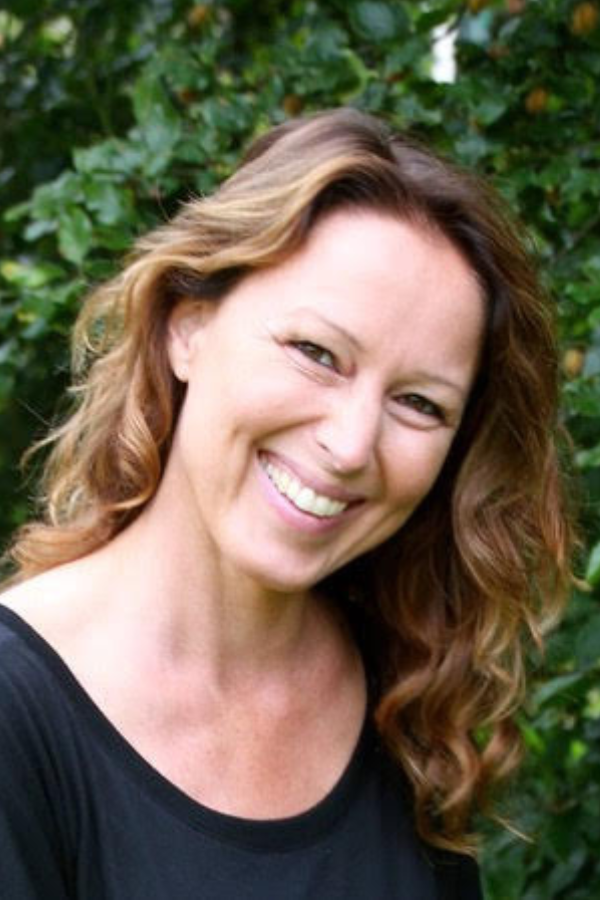
Anne Hering
Founder, Zhineng Qigong Institute
Anne is a senior Zhineng Qigong teacher and founder of the Zhigong Institute, practicing since 1999. Since 2002, she has trained teachers and guided students internationally. Her work bridges ancient Chinese wisdom with a clear, grounded, and experiential approach. Anne’s teaching invites personal transformation, vitality, and inner balance, offering Zhineng Qigong as a living path for both beginners and experienced practitioners.
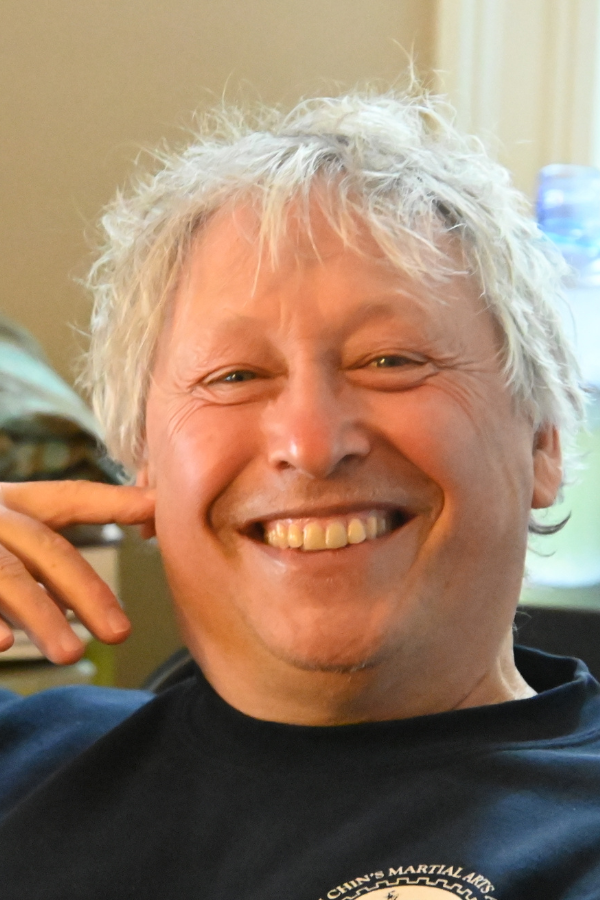
Peter Wayne, PhD
Harvard Medical School
Peter Wayne, PhD, is a researcher, practitioner, and instructor of mind-body and integrative therapies. He is the Bernard Osher Associate Professor of Medicine in the Field of Complementary and Integrative Medical Therapies, at Harvard Medical School (HMS) and Director for the Osher Center for Integrative Health, jointly based at HMS and Brigham and Women’s Hospital. Dr. Wayne’s research primarily focuses on evaluating how complementary and integrative therapies (mind-body movement, acupuncture, chiropractic) clinically impact aging and chronic health conditions, including balance, mobility, chronic pain, cognitive and cardiovascular function, and overall well-being, and understanding the physiological and psychological mechanisms underlying observed therapeutic effects. He has served as a principal or co-investigator on more than 35 NIH-funded studies and has authored more than 200 peer-reviewed articles. Peter also has more than 45 years of training experience in Tai Chi and Qigong and is an internationally recognized teacher of these practices.
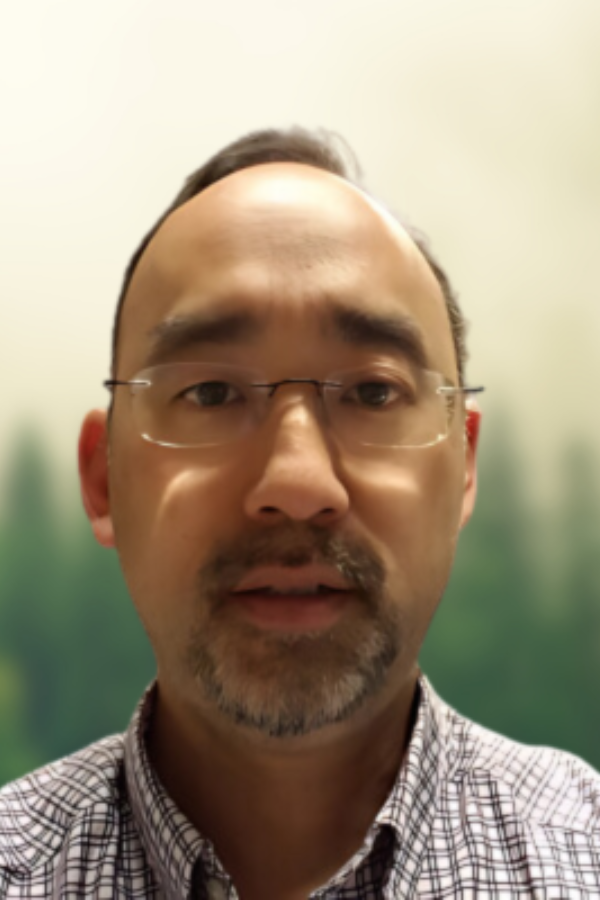
Andrew Ahn, MD
Harvard Medical School
Andrew Ahn is Chief Medical/Science Officer at Labfront, an affordable research platform democratizing access to continuous physiological data analytics for scientists. He also serves as Director of High-Tech/Soft-Touch Program at HMS/MGB Osher Center for Integrative Health. His core passion centers on empowering individuals with tools/knowledge to flourish and by pushing the boundaries and capabilities of health science. He is a physician-scientist with a background in physics/engineering, physiological signal analyses, digital health, and integrative medicine
Join the Community
For exclusive access to the latest research, resources and stories transforming how we experience healing.
Phenomena – Episode 03
Original Airing: 6/9/2026
Produced by Sounds True Studios.
Music composed by Dan Baboulene.
“Healing as a Way of Life | Qigong, Meridians, and the Science of Qi at Harvard”
Andrew Ahn:
When you inject this nuclear dye very superficially in the skin, this dye would subsequently migrate up the limb, and it didn't correlate with any known structure at that time. It traveled along a trajectory that matched with a meridian. That just blew me away, and I felt like we were onto something.
Ivy Ross:
We are in a time of convergence. Throughout history, almost every culture in the world has used what we now generally call energy healing to help ease suffering. But modern medicine pushed these practices, these phenomena, to the margins, and stories of energy healing became just that, stories.
I'm Ivy Ross, and as a business leader and artist, my life has always been about navigating these two very different worlds, the solid ground of hard data and the undeniable power of the invisible. At heart, I'm a child of wonder. I'm curious about the forces that connect us all, and so I invite you to join me as I explore this new frontier in medicine and healing with astonishing stories, compelling science, and an open mind and heart.
This is Phenomena, the science and stories of energy healing.
So far on Phenomena, we've focused on stories about healing moments, cancer, migraines, arthritis, all being treated by energy healing. But today, I wanna come at this from a different angle. What if healing is deeper than just moments? What if true healing comes from mindset, an entire way of living your life?
Welcome to the world of Qi. In this episode, we'll explore the idea of this invisible life force that, like energy healing, has been known for thousands of years. We'll talk with Harvard researchers who are investigating Qi and how it might be traveling through our bodies following ancient maps called meridians.
We'll journey all the way from intramuscular fascia to universal consciousness, which is quite a trip. But first, let's meet a Qigong master from the Netherlands who came to Qi through, of all things, a videotape. Meet Anna.
Anne Hering:
So I'm Anna Hering, and I live in the Netherlands for about 26 years. I was born in Germany, and after my study, I went to Spain. I lived in Barcelona for some years and met a Dutch husband and went to the Netherlands.
Ivy Ross:
Anna had landed in a new country and a new life, but she couldn't speak the language and didn't have a job. She found herself searching for something to do until the day she discovered Qigong.
Anne Hering:
So I came across an institution, and they taught Qigong, and then especially one Qigong form, which was Zhineng Qigong. There was not a Qigong class. There was a video. We still had video tapes in that time. That was '98. And on the video, on the backside, there was written, "If you do this for 100 days in a row, your whole life will change." I thought, "This is like a promise. Let's try it."
Ivy Ross:
Something about this promise really stuck with Anna, so she started practicing every day, a simple combination of breathing, focused intention, and gentle movement, and after a bit, things started to happen, not just in her body or mind, but in her life.
Anne Hering:
I felt a different state, and I believe that's the most important thing in Qigong, that you reach a Qigong state, which is calm, which is clear. You have a clear mind. And within the 100 days, many things happened. I learned Dutch quite quickly. I found a job, and I thought, "Wow, this is real. This really happens." And I believe it calmed down my mind in a very special way.
Ivy Ross:
Anna sees those 100 days of practice as something that truly improved her life, but language and a new job were only the beginning. Anna had also been living with a difficult physical reality for years, one that doctors told her could be permanent, and Qigong started to help with that, too.
Anne Hering:
When I was 22, I had a car crash on the German highway, which wasn't much fun. So I crushed my neck vertebrae, and the result was a lot of headaches and pain in my body. And when I started to practice Qigong, I was 26, and I could feel that this Qi also works on my neck vertebrae, and the headaches were not gone, but they were less and less.
I also had some allergies. And after I think I practiced like one or two years, everything was gone. I believe if my medical doctor who told me when I was 22 that I will never move smoothly for the rest of my life, and I will keep on having pain, if he sees me now, he would say, "This is a different person." Because I can do all the movements, and I have never had pain for the last 25 years.
Ivy Ross:
This is not the energy healing story many people come looking for. Most of us would say we want the single treatment miracle, especially if we're in pain. We want a transformation we can point to, even if we can't explain how it works. We just want the pain or sickness gone. That isn't Anne's story, and that, she'll tell you, is exactly the point.
Anne Hering:
You know, Qigong is part of Yangsheng. That's the Chinese lifestyle. So I also teach how to eat, how to feed your body, how to nourish yourself, how to sleep, how to live. There's a little bit of feng shui. So this is not only the movement part of Qigong. Chinese medicine is much more.
Ivy Ross:
What Anne is getting at here is that the practice, the movement, the breath, the stillness, is one thread in a much larger fabric. It's an entire orientation toward your life, toward your own body. Over the years, as she learned more and expanded her practice into other parts of her life, Anne decided this was too big, too essential not to share.
Anne Hering:
And then I decided to set up my institute to teach. And then there was a Chinese teacher. He came here every year, and there was a big community.
Ivy Ross:
Anne follows and teaches a specific branch of Qigong called Zhineng Qigong, which translates as wisdom healing Qigong. There's more about that on our site at phenomenahealing.com.
What she has seen in her friends and students over more than two decades isn't overnight cures. Anne saw that they all experienced a much deeper and longer lasting transformation.
Anne Hering:
Most of the stories I remember often don't start with the physical part. Most transformations start with the mental part. So when people see themselves as a victim of something or in a life situation which is not changeable anymore, when they accept the situation in that moment, that's what I saw often through the practice of Qigong: they could calm down the mind and accept what is at that moment in life. I believe that's the beginning of healing of everything.
Ivy Ross:
It's the beginning of healing, not the end. And Anna is very clear about something. She does not consider herself to be a healer. She says she stopped performing what we'd call healing sessions more than 15 years ago.
Anne Hering:
I can give a healing with my hands, but I prefer to give people awareness that if some body part doesn't function well, first try to get the Qi moved again and transform the information. I don't consider myself as a healer. I consider myself as someone who has an enormous toolbox, and I can show it to other people, guiding them through the world of Qi and Qigong and giving them awareness of themselves, and that's the beginning of all healing. If you realize that you have all capacities to transform yourself, to transform your mental part, your emotional part, your physical part through that.
Ivy Ross:
When I heard Anne say that, I thought about every time I've approached a health challenge looking for the expert who would fix it, the specialist who would find the answer, and how rarely I've thought to ask, "What does my body already know?"
Anne has a way of talking about Qi, the life force at the center of everything she teaches, that I keep coming back to.
Anne Hering:
Qi, the translation for me, it's matter plus energy plus information. So you work with your physical body, but that's only a small part. The nice movements you see us doing, it's probably the smallest part of all work with Qi. The most important part is the information part. How do you treat your own information? Because you have information in yourself from the moment of your conception, probably before. That influences the information you keep. That influences the energy part. If your information fits in your present state at the moment into your life, then the Qi can flow, which results in a healthy body.
Ivy Ross:
When your information, what you carry, what you believe, what you hold in your body from the past, is aligned with your life as it is right now, Qi flows. When it isn't, it stagnates, and stagnation, or what many healers call getting stuck, that's where illness can start. I asked Anne how she thinks about that in practice, what it actually means to work with information rather than just the physical body.
Anne Hering:
Qigong, you cannot understand with your mind. You can only understand with your being. You can feel the Qi flowing through your body. You can feel the emotion you have at that moment, and you can be aware of the calmness you discover within yourself. Because it's a journey within yourself. You don't need to travel anywhere.
Ivy Ross:
What started in a small village in the Netherlands, sharing her own story, teaching a few friends, grew into an institute, then a teacher training program. Now she works with the largest Chinese medicine school in Europe.
Anne Hering:
When I look back, I think someone put me on a mission and it never stops. I'm probably not the normal case with fancy healing stories, but I believe that's more the future, that people should take responsibility for their own health. It's also nice for people because they know themselves better than I do, right? So the best treatment you can give yourself. I'm not the Qigong teacher or guide that receives people, they lay down and I do healings, and then they leave without any knowledge. I would rather teach them how to fish instead of giving them the fish.
Ivy Ross:
What she's describing is something more fundamental, a different relationship between a person and their own body, and a different question when something goes wrong.
Anne Hering:
All physical matter in the universe has a Qi field around it. If we talk about Qi field, it can be a Qi field of a small thing. Let's talk about the body. So every cell in the body has a small Qi field. Every bone, every joint, every organ, all of it, and all the small Qi fields make your big body Qi field. All big body Qi fields of the people on Earth make a big human Qi field, and all together we have the universal Qi field. We can talk about that for hours, I believe.
Ivy Ross:
Anna is describing an invisible architecture, pathways through the body that carry Qi, a field of information that connects every cell to every other, a body that knows how to heal if it's given the right conditions. To the Western ear, that sounds like a metaphor, like a beautiful, ancient metaphor. But here's what I discovered when I started talking to the scientists at Harvard: some of that architecture might not be a metaphor at all.
I wanna introduce you to two Harvard researchers who have each spent decades trying to understand these practices from a more scientific perspective. They sat down with us together to talk about Qi, Qigong, and more. First, here's Andrew.
Andrew Ahn:
My name is Andrew Ahn. I am a physician scientist. I'm a doctor trained in internal medicine, but I also do research in integrative health, with a specific focus on acupuncture. I think I've done this for almost 25 years to try to understand what points and meridians are, with a specific focus from the bioelectromagnetic point of view.
Ivy Ross:
Meridians are the pathways that traditional Chinese medicine says Qi travels through. Imagine the body not as a collection of organs and tissues, but as an intricate system of channels through which energy flows, rivers of vital force moving in precise patterns through every layer of your being, rising to the surface at specific points where the energy becomes accessible.
Andrew's research on meridians was why we asked him to join us, and with him was Peter Wayne.
Peter Wayne:
My name is Peter Wayne, and I think I come to this podcast wearing two different hats. One is as a researcher and the director of the Osher Center for Integrative Health, which is based at Harvard Medical School and Brigham and Women's Hospital, and the other is as a practitioner and researcher in the space of Tai Chi, Qigong, and mindful movement.
Ivy Ross:
Peter is one of the most credentialed Western researchers in complementary and integrative medicine. He's been an investigator on more than 30 NIH-funded studies, looking at the impact of therapies like Tai Chi and acupuncture on a variety of medical issues, and he's the author of The Harvard Medical School Guide to Tai Chi.
What led him to all of this? Peter shared that his interest in Qigong came from a love of Frisbee, and how he wanted to find a more graceful way to move.
Peter Wayne:
And that was about almost 50 years ago. Still hasn't happened, but I'm really glad that I've embarked on that journey. But that interest in mind-body movement and sports led me to Tai Chi and a love of Asian philosophy. So much of East Asian medicine is an ecological model of health, where the interconnections create wholes that are bigger than the sum of the parts. And that's really in contrast to a lot of more reductionistic Western medicine, which is very siloed based on organs and other artificial compartments, which are useful to study, but sometimes, to use a metaphor that brings us all together, sometimes medicine is not seeing the forest for the trees.
Ivy Ross:
Two researchers with two very different entry points, and at the outset, we asked them both a deceptively simple question. What is Qi?
Peter Wayne:
You want to go first, Andrew?
Andrew Ahn:
No, no, you go. No, no, I went first last time.
Peter Wayne:
Tai Chi move, ward off right.
Andrew Ahn:
Oh my God.
Peter Wayne:
So defining Qi is a pretty tricky challenge. It doesn't translate well from the East to the West, and it's quite pluralistic. There's a common notion that Qi is energy, like it's a bioelectrical part of the spectrum, that we can have Qi meters, and you can tell how much Qi someone has or when they're sick by just measuring this very simple measure. And maybe energy does shape things and motivates things, but I think it's too narrow a definition.
Ivy Ross:
Peter explained that in Chinese cosmology, Qi is a very broad concept. It's what makes the plants grow. It's the food we eat. It keeps the moon from spinning away from the Earth. And then his scientist mind kicked in.
Peter Wayne:
My favorite version is that it's information. It's the information that shapes things. We know, as an example, and some of us have been big fans of Mike Levin's work in morphogenesis, or how organisms unfold embryologically. But we know that when a finger is being shaped in the womb or healing, there's some intelligence in the body that says, "Put a fingernail here and not a nose hair." And that information is invisible, but somehow the intelligence of the body knows to adjust its chemistry, its physiology, its laying down of fabric around that information. So it's information that shapes the system. It's what keeps us healthy when it's moving in the right direction and the right amount. It's what shapes our emotions. It's what shapes our physicality. It's what shapes how the heart pumps and how the blood flows through the streams and the bioelectricity of the body. But I'd be curious what Dr. Ahn has to say about that.
Andrew Ahn:
I actually have no idea what Qi is. It's one of those things that sort of baffles me, intrigues me, and for that reason, I continue to want to learn more about it. But I agree with Peter. I think it is like equating to information. If you take a look at the three fundamental concepts in traditional Chinese medicine, there's Jing, there's Qi, and there's Shen.
Jing is what they call essence. To me, it is the resources that you're provided with. It is basically your potential. So the idea is almost like the battery. Like, how much capacity do you have to do something? Qi is basically how you utilize that energy, that battery that you have available to you. And then Shen is the mind, which I equate to sort of consciousness, which I think is a separate topic altogether. Qi to me is the distribution, sort of allocation of how the Jing, the electrical potential or any type of potential that you have from your body, is utilized. The entire intelligence, the information that goes behind it, from the genetic transcription to protein translation, to the metabolomics and all that, to me, that is sort of Qi, the intelligence that's behind it all.
Peter Wayne:
Sometimes the way I've heard things is like Jing is the essence you're born with. So it's your DNA, your fluids, the meat of your body. And then Shen is that sort of consciousness, the mind, the expression of things. And Qi is what connects them. It's what shapes it. It's the in-between thing. It's the glue or the connector.
Ivy Ross:
Peter Wayne, a Harvard researcher who came to this through evolutionary biology and Frisbee; Andrew Ahn, a physician scientist working from bioelectromagnetics; and Anna Hering, a Qigong teacher in the Netherlands. Three completely different paths, and they all landed in essentially the same place.
Qi is information. It's the intelligence that flows through the body and keeps it in balance. The question is, how does it flow? As I mentioned earlier, Andrew has spent years investigating this very thing, these internal pathways of energy called meridians, and this is where science helps us bridge the gap between belief and biology.
Andrew Ahn:
The three biggest, or at least the most promising areas that I felt could explain what points and meridians were came from three types of studies. One was the association of these meridians and points with intramuscular connective tissue, like intramuscular fascia. The second type of study had to do with nuclear tracer dyes. And then the third one is this idea that points and meridians are electrically distinct structures. Acupuncture points were described as having high electrical conductance, low electrical impedance or resistance, and high capacitance.
Ivy Ross:
Andrew wanted to focus on the dye studies because those, he says, are the ones that stopped him in his tracks. It started back in the 1980s.
Andrew Ahn:
Actually a number of countries simultaneously. And what these studies did was they injected radionuclide dyes, specifically technetium-99, into the acupuncture points very superficially, often applied to animals and dogs specifically. When you inject this nuclear dye very superficially in the skin, this dye would subsequently migrate up the limb, and it didn't correlate with any known structure at that time.
It wasn't correlating with the lymphatics, with the veins or the arteries. And in fact, when they injected the dye directly into the vein, the dye immediately disappeared. Whereas if they injected this dye specifically at the acupuncture point, it traveled along a trajectory that matched with a meridian. So that generated a lot of interest, and I think that was corroborated across a number of teams across the world. So that was interesting to me.
Ivy Ross:
But those dyes came with complications, including radiation precautions and specialized equipment, and those studies were decades old. And then around 2016, Andrew saw an opportunity to revisit them.
Andrew Ahn:
I was approached by someone from China who was funded by a rich billionaire who was very interested, and this team went back and then subsequently they discovered that instead of using nuclear tracer dyes, because nuclear tracer dyes come with all their issues, you have to have this nuclear safe area, there's all these precautions associated with it, then they said, "Why don't we try fluorescent dyes?" There is a particular fluorescent dye called sodium fluorescein, which they decided to just inject specifically into these acupuncture points and also an adjacent control.
Ivy Ross:
Before injecting subjects with the dye, they had acupuncturists mark known acupuncture points on the body. They wanted to see if the dye would travel from one acupuncture point to another, thus seemingly proving meridians were a real network within the body. Then they injected the dye into Pericardium 6, which is at the wrist.
Andrew Ahn:
They noticed that this dye would migrate up the arm along the pericardium meridian at the same pace and same rate as the nuclear tracer dyes that were done in dogs back in the '80s. And very interestingly, the way you would visualize this trajectory was you would shine a light, basically fluoresce that dye, and you could see that the dye would slowly diffuse and then travel at a deeper layer under the forearm, and it would sort of disappear in many people because it would go into a different layer. And then it would pop up at Pericardium 3, exactly at the acupuncture point.
Ivy Ross:
That's right at the bend of your arm.
Andrew Ahn:
They had two acupuncturists assess where Pericardium 3 was, and invariably, that fluorescent dye would pop up exactly at Pericardium 3. That wasn't associated with any vessel. It wasn't with veins or anything like that. So that just blew me away, and I felt like we were onto something.
Ivy Ross:
The dye traveled up the arm through no known vessel and emerged exactly where the acupuncturists had already marked. The dye followed the ancient maps.
Andrew Ahn:
And then when we took a look under the ultrasound, this dye was migrating exactly where Helene Langevin described as a meridian. It was between these two muscles. I forgot what these two muscles were. I think flexor carpi radialis and something like that, exactly along the connective tissue planes.
Ivy Ross:
Not a vein, not a lymph vessel, not the skin, a pathway through the connective tissue between muscles running exactly where Chinese medicine said the meridians were. For thousands of years, traditional practitioners intricately mapped these pathways through observation and practice. Now, with fluorescent dye and ultrasound imaging, researchers are confirming them with modern science.
Peter Wayne:
If you stick a needle randomly in the body, you may perturb the system, but there's some places, like Andrew has said, in the connective tissue between layers of tissues or places that are at nodes with a lot of information, that you're gonna get a bigger response. I think meridians, to me, are just a broader term of maps that reflect the emergent property of all these different physiological and bioelectrical and maybe even consciousness level things, and you can move information through those things.
Ivy Ross:
Peter has a great way of talking about what that means for the practice and for what Qigong is actually doing in the body.
Peter Wayne:
Here's a metaphor that I use a lot in my teaching. You have a block of ice that's got some particulate soot in it, and you wanna get the ice to be clean, right? You can go at it with a pickax and whack it, and then pull out those particles, a lot of work, very messy. You can melt the ice and filter it, or you can steam it and distill it, and all the molecules come apart, and in that higher energetic state, you have access to the things that are blocked in there, and they're easy to remove. And then when that steam condenses back to water and to ice, it's clearer. I think that's what we're doing in Qigong. We're working not on the block of ice level, but more on the liquid and the steam level. And to go back to the discussion before, sometimes you can think of ice, water, and gas as Jing, Qi, Shen, these different frequencies. And so we're trying to up the energetic state of the body and fix things at that higher level that we believe will then reorganize things at the lower level.
Ivy Ross:
That's the argument for practice, for doing this every day, not just when something goes wrong, which is exactly what Anna has been saying.
Peter Wayne:
So I think at the heart of a lot of acupuncture and Tai Chi and Qigong is a greater appreciation that the body has an intelligence and wants to keep healing itself, and that health emerges out of a balance.
Ivy Ross:
To end our conversation, we went back to this three-part framework that Andrew introduced, Jing, Qi, and Shen. And we asked, if Jing is our essence and Qi is a way to move that energy, then what is Shen?
Andrew Ahn:
Well, I don't know. That's such a tough question. I mean, I think we're even getting to the realm of esoterics and spirits and spiritual thinking. We are not the physical being with a spiritual experience. We're a spiritual being going through a physical experience. I think that's much more of a belief system than anything based in science. But yeah, I think that's how I would explain Shen. It is sort of that spirit or that consciousness that is that steam, that much more unrefined component that is sort of... it defines you, whereas Jing is sort of what is given to you in this lifetime, this physical being that you have. This is your DNA. This is the mitochondria. This is the potential that you have. And then Qi is, as Peter says, the communication between those two. It's just the way in which you utilize the resources given to you, but having also some deeper sense of purpose or why you're here, and that's probably defined a little bit more by Shen.
Peter Wayne:
Just riffing off that a little bit, there is such a desire or such a legacy in conventional medicine to stick with the material. What does this chemical do to that receptor, and how does health emerge from that shift? How does this mechanical surgery change things? And of course, we know that this is quite remarkable.
But the director of our clinic, or the former director who just stepped down, he would talk about empathy-based medicine being way more important than evidence-based medicine. The second people feel like they're heard and seen, there's a trust, and that's when they think, oh, healing could happen. We know that just being heard and seen is important.
I think the quote by Thich Nhat Hanh, "Meditation is the serene encounter with reality." There's just no friction. You are who you are, and you're meeting your unfolding self. And I feel like that higher level, we can call it all sorts of things, consciousness, spirituality, whatever, but we see this even in people who are in palliative care and have psychedelic experiences that break their old patterns. And they realize, "Oh, I see this bigger connection of myself to something larger. And now I'm more at ease." You see the depression, anxiety, pain go down, but their sense of who they are, even though they're dying, they're healthier because they feel like they know where they fit in some bigger place, and now their body can do things.
You're okay. And that's, I think, at the deepest level, if we can hear that from other people, but even more so if we can hear it from ourselves, that's freedom. We're okay.
Ivy Ross:
Could it be that the moment we connect to something larger, that's when we're okay? And what if that's the whole thing? What if that's what healing actually is?
As always, I've invited my friend and researcher Meredith Sprengel to discuss. She's been tracking the science in this space for more than 15 years. Meredith, welcome.
Meredith Sprengel:
Hi, Ivy.
Ivy Ross:
Hi. Does that framing, healing as a practice rather than an event, resonate with what you see in the research landscape?
Meredith Sprengel:
Well, I think that's a great question. Usually people are trying to prove that it works, and therefore you create the conditions that enable you to study it, and then you say, "Yes, it works," or, "Doesn't work." That in itself kind of isolates healing to an event or a series of events. The research tends to then highly focus on an intervention and an outcome and not necessarily a lifestyle, because it's really hard to study a lifestyle.
Ivy Ross:
Yeah, I think in this case, one needs to rely on just personal stories about improved health like Anna has talked about.
Meredith Sprengel:
What I loved about Anna's story is how much making these small changes, she just integrated Qigong into her life, and that created a new space for her to relate to herself and the world and also what she needed to accomplish, and therefore the downstream effects over time had a real impact.
Ivy Ross:
Yeah, so it's had huge impact in many, many areas.
Meredith Sprengel:
Anna has a lot to say about what healing actually means, especially since people approach her all the time wanting to know if she can heal them. And what Anna says is a bit like a lot of the healers we've spoken to: "I can only be the tool that helps facilitate the healing process." So the healing always comes back to you, and it's not just healing in that moment, it's the work you do to continue to maintain and integrate what happens.
Ivy Ross:
Yeah, I love that, because we tend to look for the fast food lane for healing versus doing the work ourselves. There's so many modalities, so much information out there. People are taking it in in their head, and they're not embodying the information and living the practice. And certainly Qigong and other disciplines are a lifelong practice and integration into your life.
Meredith Sprengel:
Yeah. It really reminds me of a conversation I was having just yesterday with a scientist. And he studies psychedelics, but just stay with me, it does have relevance here. And he said that what he found in studying people who have had true transformations that become a long-term practice where they really integrate what they've learned from that experience is where the mind and the brain and the body feel one. Even though psychedelics happen in a moment or a few hours, right, it's not something that continues on, it's not a moment, it's kind of a shift in mindset, right? It's a remembering of the whole self, and it's integrating that knowledge of your whole self. And what I thought was the most interesting about that was that he found those people who remembered again very much that they were integrated into their body were able to really put that stuff into practice. That's kind of how I think about it.
Ivy Ross:
No, I love that. I think that's really important, because I think that's a key distinction. Because what's happened now is I think the field of healing has opened up, and people are running to take this class, this meditation thing, that. But they're missing some of the real deep understanding and lesson, and I think we're fascinated with our cognitive mind and we're working from the neck up. I really love the dye study because it definitely begins to show what I've always believed to be true. What do you make of that study?
Meredith Sprengel:
A finding like this produces so many interesting hypotheses and questions. Like, can this be replicated across multiple meridians or clinical populations? How does it support this concept of Qi? So when you have these amazing publications and then things go quiet, you wonder why there isn't any follow-up, and it's a bit frustrating, but I think this points back to this whole problem of the current paradigm. This doesn't fit within our understanding of how the body works, and so what ends up happening is things go quiet and institutions don't support it.
Ivy Ross:
Wow, going quiet instead of getting curious. Yeah. That's a shame because to me, it brings up, as you point out, so many questions that I would have hoped that the community would have the opposite reaction, right? To dive in and become more curious and do more studies.
Meredith Sprengel:
Yeah, and I think you make a really interesting juxtaposition, going quiet versus curious. I think you see this happen a lot in these frontier fields because when the mainstream doesn't have a way to wrap their mind around what's going on, it kind of creates some sort of a paralysis.
Ivy Ross:
Yeah. What causes this paradigm paralysis, and how do we crack it open?
Meredith Sprengel:
There are a lot of theories about how you make change in science, and what you currently see is that most of the innovations in these integrative health or consciousness-based healing modalities, the explanation of mechanism and how they work kind of just get explained by the current way that we think about health and healing. Whereas what you see with a result like Andrew's, and also with Lorenzo Cohen's work, is it's not fitting within that paradigm, and they're going to keep trying to fit it within the paradigm until it breaks. And I think that's how you make change. There's a story that I wanna share about a scientist that I know, and I would consider him a friend.
His name is Neil Theise. Neil discovered what some people are calling the third circulatory system of the body. So you've got the cardiovascular, the lymphatic, and now this, which is the interstitium, and this might be a key way that energy travels in the body. We're gonna get to that more in a later episode. But my point here is that Neil has said that one of the reasons that he was able to identify this new organ or new system, the interstitium, was because of his contemplative practice. He has spent years meditating and engaging in a number of different spiritual traditions, and he believes this enabled him to engage in non-judgmental observation, which meant he could see things as they were. Not as he expected them to be. And I think that's a really beautiful way to illustrate how these practices can impact not only your personal life, but the science.
Ivy Ross:
Yeah, that's beautiful.
Peter Wayne:
I always love that story.
Ivy Ross:
You know, I'd love to talk a little bit about Qi as information, because Peter and Andrew and Anna all arrived at the same definition of Qi, coming at it from very different places, referencing it as information. But what do you think about calling Qi information?
Meredith Sprengel:
What's interesting is there's a lot of concepts already in biology and biophysics that evoke this idea of information. So I'm sure you've heard there's genetic information that's carried in your DNA, and there's signaling in your body that produces information. So think of a hormone like cortisol that's brought on by stress. This can trigger responses across multiple organ systems simultaneously, which again evokes this idea of information. And Mike Levin, who Peter Wayne mentioned earlier in the podcast, his research is all about information in the body, and he looks at how cells engage in what you could call thinking behaviors. This also implies some kind of information transfer at a cellular level. So to get back to your original question, could Qi be information? Maybe. But we don't know, and that makes it interesting. It's a new way to think about health and healing, and also to think about maybe how you would break that paradigm paralysis, as you said.
The history of medicine is also full of things that have worked long before we've understood why they work. Acupuncture is a great example. There are so many theories about how it works, and we really still don't have a unified idea of what is happening when that acupuncture needle goes into the skin.
Ivy Ross:
What's exciting to me, and I've been doing acupuncture for years, is now there are new layers of information that we're finding out at multiple levels, the bioelectric level, many different levels, that support this really important potential structure in the body. Do they think that the meridians are the interstitium, or the interstitium is a new organ that connects meridians?
Meredith Sprengel:
So what Andrew found was that it was not lymphatic, and it was not skin tissue, and it was not traveling through any known vessel, and that actually the pathway aligned with the interstitial fascia.
The proposed theory is, and this is by Helene Langevin, she studied very much what happened when an acupuncture needle went into the connective tissue. And it created this sort of, I think they call it like a piezoelectric effect. And the idea is that the interstitium is electrically active. There's collagen and there's hyaluronic acid, and when the needle stimulates, it sends these little electrical impulses down potentially meridians or throughout the tissue.
It's a theory, but I know researchers are actively studying it right now, which we'll touch on in a later episode, and it's definitely one of the most promising threads in the whole field.
Ivy Ross:
All of this is truly interesting and unlike anything we've heard until now. And what I keep coming back to is Anna's statement that when something in your body isn't working, maybe the big question isn't who or what can fix it, but what information is stored here? That question puts you at the center, not as a patient waiting for an answer, but maybe as someone who already knows it themselves.
There's more at phenomenahealing.com. You'll find links to Anna Hering's Qigong Institute, information about Zhineng Qigong, and resources connected to the research we discussed today.
Next time on Phenomena, we'll turn to the inner world of mental health and trauma. We'll meet a Vietnam veteran whose time in the hospital brought on a disorder called ICU psychosis. He suffered for years from nightmares so constant and terrifying, he didn't know what was real and what wasn't, until he met a healer named Maggie.
We'll also hear from Wayne Jonas. Dr. Jonas is a retired lieutenant colonel and former director of the Medical Research Fellowship at Walter Reed Army Institute of Research, who has studied the effects of healing practices on PTSD in the military.
If this episode moved you, share it. These conversations matter. We are at the beginning of something, a new understanding of what it means to be well. And the more people who engage with these questions, the faster we'll find answers. I'm Ivy Ross. This has been Phenomena: The Science and Stories of Energy Healing.
Thank you for listening.

Phenomena Healing was created by the non-profit Merraki Media and the Subtle Energy Funders Collective to thoughtfully explore energy healing, using rigorous scientific inquiry, in an endeavor to help reduce suffering and promote wellbeing. "Merraki" is a Greek word that means “doing something purely for the love of it."
© 2026 Phenomena Healing