

Not a Machine but a Flame | The Biology of Energy at Columbia and Beyond
Listen Now
Listen on your favorite podcast platform



About Episode Six
What is “energy” in energy healing? Every healer in this series uses the word. Every patient reaches for it. Ancient healing traditions built entire systems around it. And modern researchers are striving to study it.
But what is energy — biologically, physically, measurably — and how does it move through the body to influence health and healing? In this episode, three renowned scientists offer remarkable visions that, taken together, start to answer this question
Martin Picard, PhD, of Columbia University has spent his career studying mitochondria, the body's cellular power sources, and has found them far more connected to our inner experiences, our consciousness, than biomedicine ever assumed, and likely far more central to how we heal.
Richard Hammerschlag, PhD, co-authored the paper that helped define the modern science of the biofield: the organizing fields of energy and information that operate within the body and extend outward from it. Like the nested Qi fields of older traditions, these are dynamic interrelating layers — energy running all the way in and likely all the way out.
Neil Theise, MD, of NYU helped identify the interstitium, a remarkable recent major discovery of a fluid-filled network running throughout the body. Consistent with the intuitions of ancient healing systems, it may help explain how signals fundamental to health and healing actually travel, aa new communication network in the body previously overlooked by modern medicine.
Together, these three voices present a compelling, eye-opening, and deeply human vision of the body and mind not as a machine, but as a dynamic energetic ecosystem.
And to close out the season, we also welcome Jonathan Cohen, Co-Creator and Executive Producer of Mayim Bialik’s Breakdown, who joins Ivy and Meredith to help land these big ideas of energy, healing, and life.
Original music composed by Dan Baboulene.
Additional music by Starluxe.
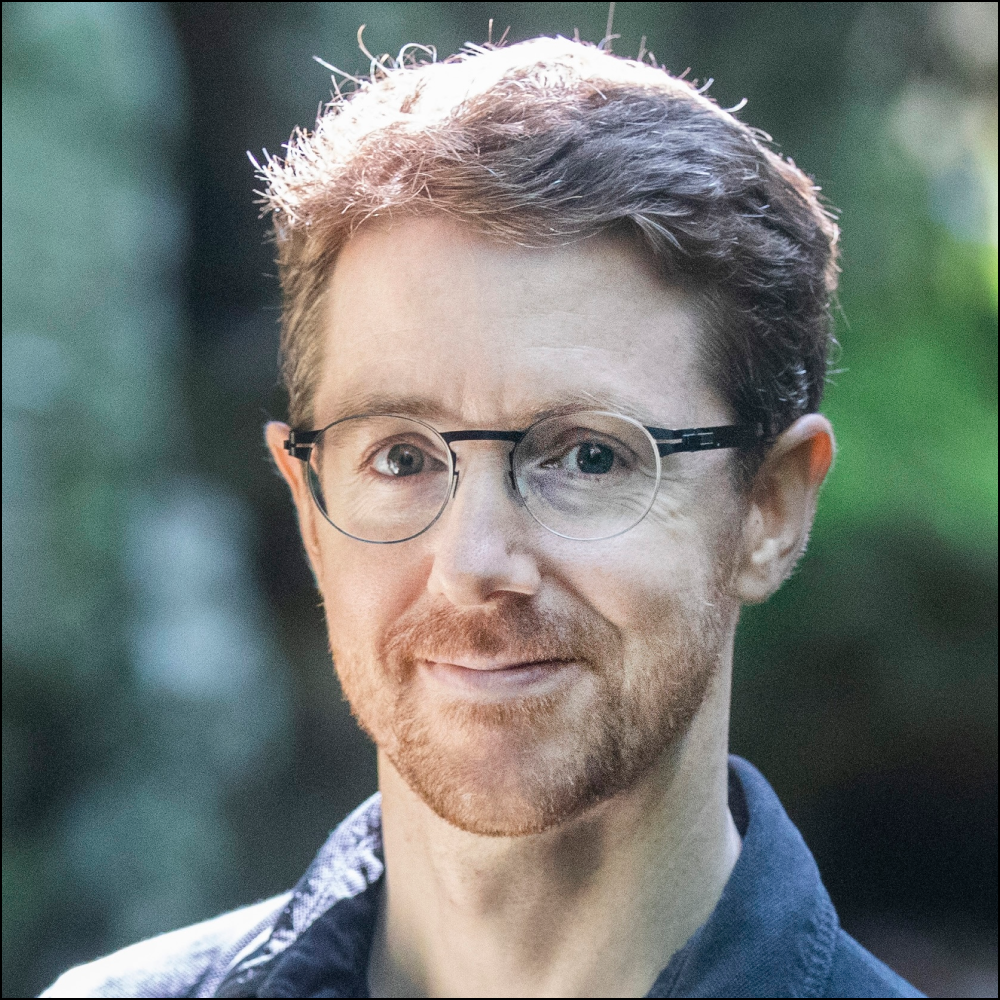
Martin Picard, PhD
Columbia University Mitochondrial Psychobiology Lab
Martin’s life is dedicated to research, innovation, and communication in service of empowering individuals to flourish. His research at Columbia has bridged mitochondrial biology, bioenergetics, and aging science with psychosocial sciences, contemplative practices, and mitochondrial medicine. His group's rigorous interdisciplinary research program has built a foundation for the nascent field of mitochondrial psychobiology. Martin is the author of the forthcoming book ENERGY (2027), founder of the Energy and Healing Institute, a non-profit organization that develops the systems and technologies advancing healing science. Working with visionary partners and collaborators, Martin is passionate about being in service of scientifically-informed, energetically-inspired initiatives that drive cultural and scientific transformation toward a healthier, more compassionate, sustainable world.
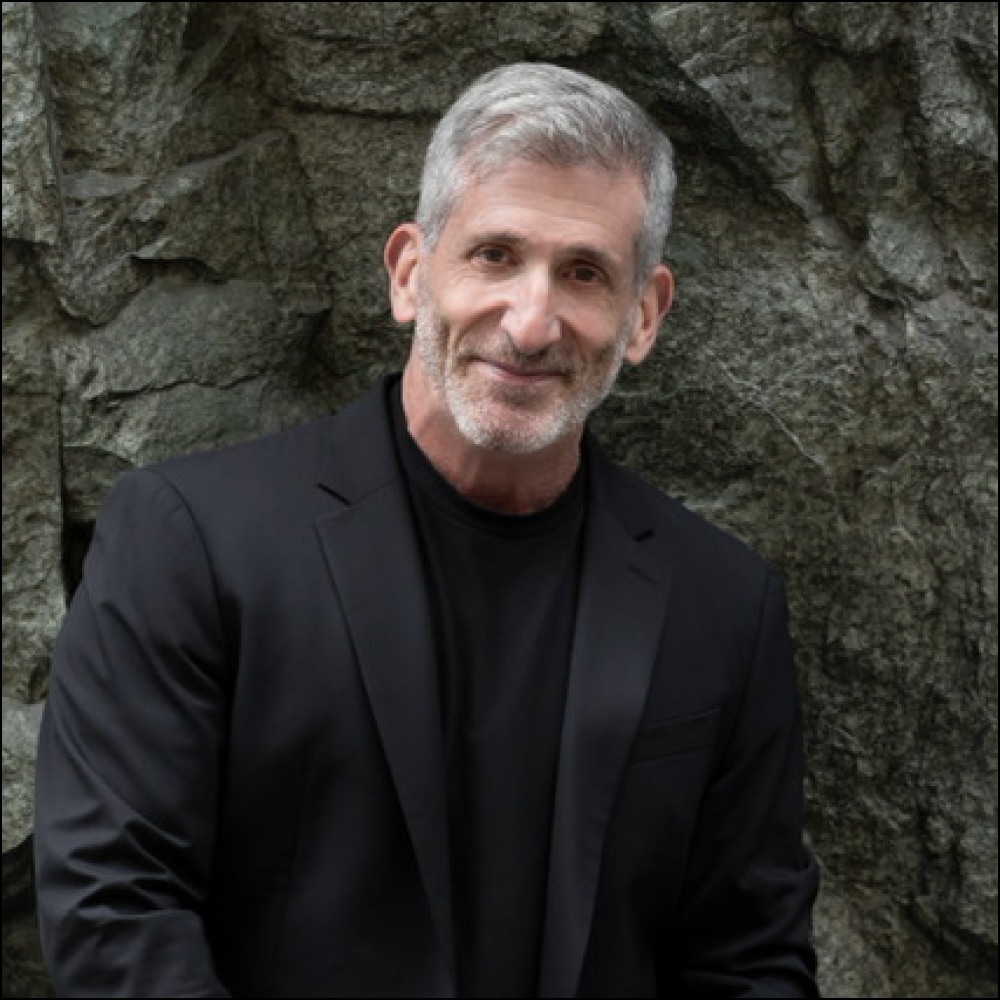
Neil Theise, MD
Professor of Pathology, NYU Grossman School of Medicine
Neil Theise is adjunct professor of pathology at the NYU Grossman School of Medicine. Through his scientific research, he has been a pioneer of adult stem cell plasticity and the anatomy of the human interstitium. Dr. Theise's book, "Notes on Complexity: A Scientific Theory of Connection, Consciousness, and Being" calls on his studies in complexity theory to address topics such as consciousness studies and science-religion dialogue. Recently his scientific understandings of integrative medicine have been highlighted in the New York Times, on The Telepathy Tapes, and soon in the documentary, "Phenomena Healing." His next book, "Sarah in the In-Between", relating his mother's elder years' adventures in non-local consciousness will be published by Spiegel & Grau in 2027.
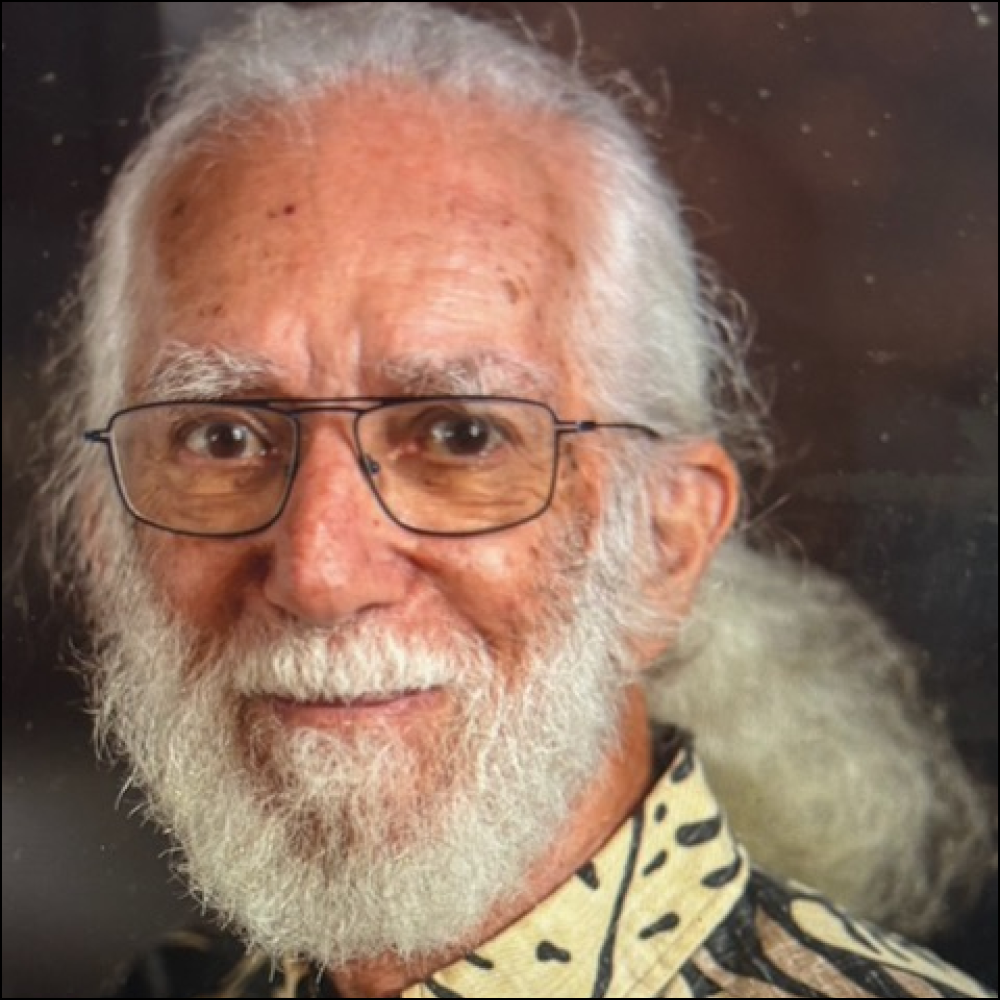
Richard Hammerschlag, PhD
Neurobiology Researcher
Richard Hammerschlag, PhD is presently retired after successive research careers in neurobiology and acupuncture. Currently, he serves as Senior Research Advisor for the Consciousness and Healing Initiative (www.chi.is), and as Scholar Emeritus at the Nova Institute for Health in Baltimore. Richard is intrigued by the biofield perspective as a bridge between Western and Eastern medicine, and as a means to reconnect us with the web of living systems.
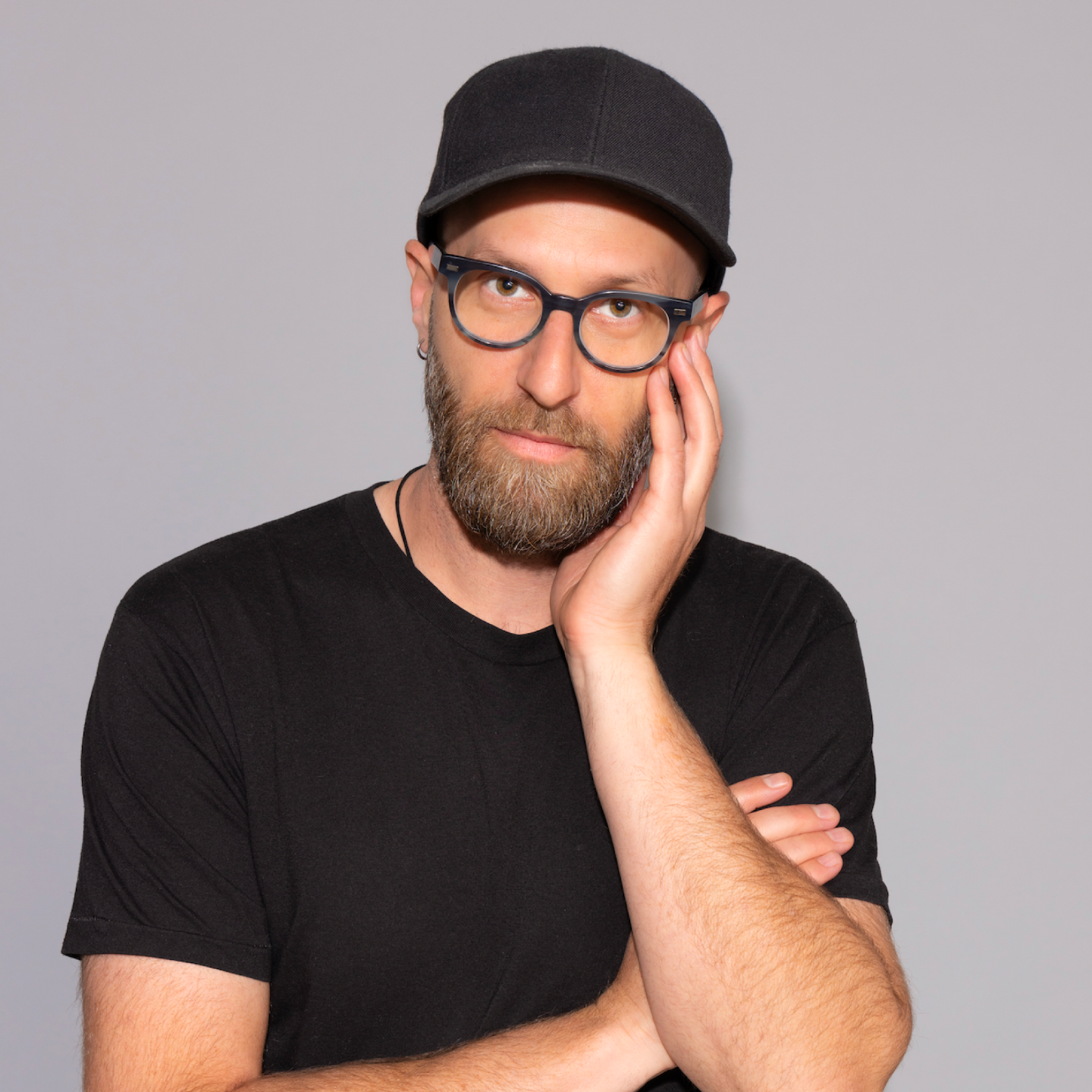
Jonathan Cohen
Writer, Founder, Energy Worker, Co-host of Mayim Bialik's Breakdown Podcast
Jonathan Cohen is a writer, founder, energy worker, and co-host and Executive Producer of Mayim Bialik's Breakdown, a podcast exploring the intersection of science and spirituality with 120+ million downloads and over 2M YouTube subscribers.
Before MBB, Jonathan built ventures at the intersection of media, emerging technology, and personalized insight. He also worked as a screenwriter and a consultant for Fortune 500 brands, creating short films that visualized how emerging technologies would function once commercialized, work that helped guide corporate investment and strategy.
With more than two decades of training in mindfulness and healing, Jonathan explores the narrative, somatic, and energetic factors that shape our health, and the nature of our reality. He believes science's next frontier is proving, beyond a purely materialist view, that we are more than our physical bodies.
He holds a BFA from the University of Victoria and an MFA from the American Film Institute Conservatory.
Additional Resources
Join the Community
For exclusive access to the latest research, resources and stories transforming how we experience healing.
Phenomena – Episode 06
Original Airing: 7/21/2026
Produced by Sounds True Studios.
Original music composed by Dan Baboulene.
Additional music by Starluxe.
“Not a Machine but a Flame | The Biology of Energy at Columbia and Beyond”
Ivy Ross:
Picture this. At a conference in upstate New York in 2025, mitochondria expert Dr. Martin Picard of Columbia University is standing in front of an audience of fellow scientists, giving a presentation. On the monitor beside him is a looping video of a single lit candle, its flame flickering against the darkness.
Martin Picard:
This is a fairly relevant analogy for what we are. What you see here is something that is organic, right? The structure of the candle is this waxy, carbon-based stuff, which is very similar to your body in many ways. You're made of the same stuff as the candle. You have a few more proteins and a few other things, but mostly it's the same kind of stuff. A flame consumes oxygen and releases CO2, which is exactly what you do. You breathe in oxygen, you breathe out CO2, and that happens in your mitochondria. We'll talk about this a little bit. What you see also with this flame is that it's flexible. And it's sensitive. It responds very sensitively to the movement of air around it, but it's also resilient. There's a quality about it that's resilient, just like us. We're very sensitive in some ways, but also very resilient at the same time. It's always in movement. It's dynamic. Second by second, it's never the same. It's adaptable. There's a warmth quality to it and a bright quality to it. It releases light, just like we do. It releases photons. And it's ephemeral. It has a finite lifespan. One day this candle will burn out and then it will die, and just like every living creature on the planet, it has this kind of movement. So we are energetic processes.
Ivy Ross:
Welcome to Phenomena, the Science and Stories of Energy Healing. I'm your host, Ivy Ross. Today we're going to tell a different kind of story. In previous episodes, we've heard from healers and the people they've healed. We've heard from scientists who have been conducting rigorous research to document and explain what happens during these healing experiences. But at the core of all those stories, there's one key question we haven't yet asked: what is energy? What is this force that animates us, that gives rise to consciousness, that can be channeled to heal ourselves and others? What does it mean not just to heal, but at a more essential level, to be alive? And what has our modern medical perspective missed about all of this? Here's Dr. Martin Picard again.
Martin Picard:
We've deluded ourselves over the last hundred years or so that we are molecular machines, and this is what biomedical science is based on. It's so pervasive that it's like the water for fish. The fish isn't even aware that it lives in water, because it's just part of its life from the moment it's born. If you grow up as a normal person in this modern-day culture, you grow up in this same world where materialism and physicalism is just your water, and you're not even aware of it. And if you grow up as a scientist in academia, it's even worse, and you become indoctrinated pretty strongly. So much so that you start to adopt a dogmatic perspective, and then if someone believes something else that doesn't fit your model, there's this kind of extreme resistance to it, to say the least.
Ivy Ross:
Martin is a professor of behavioral medicine at Columbia University's Department of Neurology, where he leads the Mitochondrial Psychobiology Lab. He's speaking from a place of deep professional and academic experience, but also from his own life story. After his presentation, we talked to Martin, and he shared that growing up, his mother was a nurse who did home-care visits, and sometimes he came along, straight from hockey practice.
Martin Picard:
She would pick me up at hockey practice, and sometimes she would say, "Sorry, I got a call. We need to go see this patient." Sometimes they were patients who were in really bad shape, and it was clear in the next few hours they were going to go, and the family was there in distress. So I got to see, pretty early on, what human suffering is. And some people did amazing — they weren't supposed to recover, and then they recovered and they healed. This was really profound. And some other people, their wound would get bad, and then they'd get a bedsore, and then they'd get an infection, and eventually they'd die. I think I wanted to understand why that is. What is it that allows some people to heal, that gives them the strength and the capacity to become whole again after an injury, after surgery, and some other people not?
Ivy Ross:
That's a question that's haunted Martin from childhood all the way through school, through his PhD program and his postdoctoral fellowship, and it's fair to say it still haunts him today. Why could some people seem to heal and some can't? Why does the same affliction land differently on each of us? As Martin said, conventional medicine tends to see our bodies as molecular machines — a view of life that assumes everything has a mechanical explanation. But the closer we look, the less that seems to be the whole story. Even some of the biggest recent achievements in medical science have this flaw in their foundation.
Martin Picard:
The Human Genome Project, which was a ten-year endeavor, had just been completed in 2001. Then 2003 is when I started college. We still had hope — the scientific community still had hope. We were going to find the gene for heart disease, and the gene for cancer, and the gene for Alzheimer's, and the gene for every disease. That was the hope. That was the hypothesis. If the Human Genome Project had been a clinical trial, it would have failed its primary endpoint. There's no gene for cardiovascular disease. There's no gene for cancer. There are a few genetic variants that explain a few percentage points of predisposition, but very few genetic defects are fully penetrant — meaning if you have this defect, you will get sick. That's a very small sliver of the truth. The reality is there's a lot of plasticity and malleability to biology and to health. And even when there's a severe genetic defect that predisposes you to disease, it's not written anywhere when you're going to get sick, or who's going to get sick with what, at what time point. Life is dynamic. Health is dynamic. And I just felt like this was not the truth. Back in those days, if you cloned a gene as a scientist, this would make your career — you'd win a prize, you'd get tenure as a professor. Discovering a gene was a big deal. And I think this taps into something deep, some deep bias. Maybe it was a bit of rebellion against the fact that I wasn't learning what I was hoping to learn — how the mind, the human spirit, actually connects with the biology, and why people get sick, how people heal, why some people can heal and some can't. There was none of this. Everything I was learning was cell biology. Even physiology was treating the body like a machine.
Ivy Ross:
Seeing the body as a machine means more than just reducing health into pieces and parts that can be tinkered with and fixed, separate from the whole. It means treating every disease the same way, regardless of the person who has it.
Martin Picard:
You have three people with the same disease — say, migraine. One person's migraine is going to be worse with heat and better in the morning. Another person's migraine is going to get better with cold, and it always gets worse as the day progresses. And another person's just lasts for days and is immovable. These are three different disease entities, and they have the same label. Therefore, in medicine, we treat them the same way. We try this drug, this drug, this drug. We have no way of really individualizing or personalizing treatment in the way that we need to. There's a famous quote from the physician Osler, who said it is much more important to know which person has a disease than to know which disease a person has. So you should be treating the individual. In some ways, medicine starts there, but then it very quickly becomes: this person is a molecular machine, and we need to identify the diagnosis, and then find what drug is going to fix that diagnosis, or fix that symptom.
Ivy Ross:
In this perspective, medicine is treating the label, not the person. And while that approach obviously benefits many people, seeing the body as a machine and healthcare as a system can also overlook the individual. It's a framework that can't see the differences between us. We spoke to two researchers who have explored this same contradiction from different angles. First, meet Dr. Richard Hammerschlag.
Richard Hammerschlag:
Maybe I can introduce myself by saying two things. First, I'm a recovering biochemist — what that means is I had about twenty-five years of a career in basic research in neurobiology. My PhD is in biochemistry. I then made a career switch to acupuncture research, which I greatly enjoyed, for about ten years. And then I retired, and in my retirement I've become a biofielder. What can I say? I've gotten fascinated, because I think the biofield is a link between conventional biomedicine — certainly the body that conventional biomedicine looks at — and the body that acupuncture and Chinese medicine looks at, which is a very different body, based on flow and interconnections.
Ivy Ross:
Biofield is a term we've heard many times in this podcast. It was coined in the early 1990s by a committee under the newly established Office of Alternative Medicine at the National Institutes of Health. Dr. Hammerschlag has been one of the key figures leading the study and exploration of the biofield. In fact, he literally wrote the paper on it, back in 2015.
Richard Hammerschlag:
Think of biofield as an umbrella term that covers three different but related types of phenomena. First are what I call little-b biofields — physiological activities that we know exist in the body, twenty-four-seven, involved in regulation. The electroencephalogram, the electrocardiogram — those are electromagnetic fields. Biophotons are another area of great interest — light particles that appear to be released as signals between cells. So those are all little-b biofields. The second area is what we call big-B biofield, which is a composite field — perhaps a composite of all of these little biofields in the body. It's a field that exists within the body but emanates from the body. It's something that all living things contribute to, that we exist within.
Ivy Ross:
Dr. Hammerschlag's description here sounds almost exactly like Anne Hering's description of Qi fields in Episode 3 — this fractal, nesting-doll image of little fields of energy combining to make bigger and bigger fields. And he goes on to explain the interconnection between these fields, too.
Richard Hammerschlag:
Big-B biofield also asks us to consider that I don't end at my skin. I think we're beginning to have a strong sense of that, and that's where a lot of biofield phenomena will one day be explained — on the basis of what that means. What is this field that we all interact within, that is not confined to the "me" which somehow we've grown up being taught exists only within my body? And the third way the term biofield is used, of course — the one we're all familiar with — is biofield therapies.
Ivy Ross:
Those are the therapies we've been exploring through this whole series: Reiki, Qigong, distance healing, and more. This framework of big-B and little-b biofields is a way of viewing our bodies not just as machines, but as overlapping and interconnected fields of energy and information. It's a more fluid and nuanced view that better answers Dr. Picard's questions about the variability and individuality the mechanistic perspective overlooks. Which leads us to our third and final researcher of the episode.
Neil Theise:
My name is Neil Theise. I am an adjunct professor of pathology at New York University Grossman School of Medicine. I worked with the liver transplant team for about thirty-five years. That got me into adult stem cell research, which got me into complexity theory, which got me into consciousness studies, integrative medicine, and science-religion dialogue. And independent of that, I wound up doing some novel human anatomy research — discovering that something called the interstitium, the spaces between cells and around tiny blood vessels, turns out to be a body-wide network through all the fascia of the body, connecting everything. It's a communication network for the entire body.
Ivy Ross:
There's a lot to explore with the interstitium, which has amazing potential for explaining how biofield therapies and energy healing might actually work in the body's biology. But I don't want to skip over something else Dr. Theise said, and that's complexity theory. He's written an incredible book called Notes on Complexity, and we'll link to it and other sources on our website at phenomenahealing.com. Complexity theory is based on an idea similar to what Dr. Hammerschlag was describing with little-b and big-B biofields — this cascade of interconnecting influences. Dr. Theise was introduced to the idea through an interesting program in the UK that connected artists and scientists in dialogue. It came up during a conversation he was having with an artist named Jane Prophet.
Neil Theise:
I told her about stem cell stuff, and she said, "Oh, that sounds to me like those complexity people who talk about ant colonies and slime molds" — the way I was talking about cells moving in the body was how they would talk about ants moving in a colony. And so this is where I really learned about complexity theory. I was left with this really difficult puzzle, because as a scientist I thought: well, is my body this thing? Or is it a colony made up of cells, the way a colony of ants is made up of ants — in which case that colony isn't really a thing. So maybe my body's not a thing. But if it's not, then what is it? From a Western scientific and medical perspective, I thought there had to be a right answer to this question, or at least a more right answer.
Ivy Ross:
Like Dr. Picard, Neil Theise had stumbled into a question he couldn't answer or ignore — what they've both called a scientific koan, an unanswerable question. One afternoon, walking in New York City, Dr. Theise had an incredible experience — a moment that led to what I can only describe as a scientific and spiritual epiphany.
MUSIC UP & UNDER
Neil Theise:
I was walking in New York City down 19th Street, coming to the intersection with Park Avenue, and there was a stop sign. I was obsessing in my head: am I a body or cells? Am I a body or cells? In Zen practice, we talk about koans — these little puzzles, or concepts, or questions that we can't keep ourselves from pursuing and digging into. So this had become a koan for me. I'm standing there thinking, body or cells, am I a body or my cells? Then the light changed, and the people next to me on the curb stepped off. I couldn't step off myself, because my leg had turned into a flock of cells. It was strange. Then it cohered back into a leg, and I crossed the street. Two weeks later I was sitting in the zendo where people come to meditate, and I lit the incense on the altar and sat down to meditate. Instead of doing what my official Zen practice was, I was sitting there obsessing — am I a body or cells, body or cells. At one point I looked up. I always get choked up when I talk about this. It's hard to talk about. I looked up and saw the stick of incense on the altar becoming smoke, and I thought, oh — stick or smoke, body or cells. It isn't one or the other. It's both, and not either-or. In that moment, instead of it being a concept, it was this really visceral experience of what the Buddhists call emptiness — emptiness of inherent existence. Things appear to be things, or phenomena arising from smaller things, depending on your perspective, and neither one is more correct than the other. In Buddhist terms, the absolute versus the relative — they are not separate. They aren't different. It's just how you experience them. In that moment, suddenly the science and the spiritual practice just became one single thing, in a really indisputable way, for me.
Ivy Ross:
Martin Picard's beautiful link between the light of a candle and the movement of life. Richard Hammerschlag's biofields, overlapping and interconnecting. And Neil Theise's vision of body and cells, stick and smoke. We are not machines. We are dynamic processes — the incense becoming smoke, the burning flame. For me, that's the answer to what energy is, at a philosophical level. But next, we're going to hear what that answer could be at a scientific level.
Ivy Ross:
For now, let's set aside these abstract ideas about energy. While Martin, Richard, and Neil might be skeptical of a purely mechanistic model of the human body, they're also experts in their fields of scientific research. They're big believers in the data, and they've got plenty to share. To understand energy from a physiological perspective, let's start small — smaller than cells. In fact, let's go inside cells, where energy lives in the body: mitochondria, extraordinary structures Martin Picard has spent his career studying.
Martin Picard:
There's something really special about mitochondria. Mitochondria are the reason we exist as multicellular bodies with organs, and the fact that we're thinking, feeling, conscious human beings and animals is because of mitochondria — because of the history of life. The only thing that existed on the planet about two billion years ago was single cells, little bacteria-like organisms on the sea floor. At some point, a big anaerobic bacterium that couldn't use oxygen for transforming energy either engulfed a small bacterium that was aerobic — that could use oxygen to make energy — or the small one colonized the big one. We don't really know. But in the end, that doesn't matter. The end product is that there was symbiosis, working together from the inside — endosymbiosis, it's called. Endosymbiosis of mitochondria allowed cells to become social, somehow. Instead of bacteria all fighting against each other, just wanting to make more of themselves — this really selfish kind of behavior — that behavior was transformed into a more social, more communal, collective behavior. There's very good evidence that the advent of mitochondria is what made this possible. Cells developed the ability to talk to each other, probably in more complex ways. Then you had a bunch of cells that stuck together and said, "Hey, you guys get some food, and we're going to do the moving" — the propulsion. Then you had the beginning of muscle, and a stomach. At some point, some cells probably differentiated, and these became really good at integrating stuff, and smelling stuff, and that became the forebear of the brain. But that required cells to create a bigger self. Once you have a bunch of cells stuck together and connected — energetically connected, and we know that happens in part through bioelectricity, so they share electrical current between them — then they can feel each other. Not only can they feel each other, they become each other. So if your buddy the cell next door is suffering, you are suffering too. That's kind of a condition for this really cohesive social collective.
Ivy Ross:
The origin of multicellular life — of bodies and minds — is rooted in the capacity to know and feel what the cell next door is knowing and feeling. Life as we know it comes from interconnection, which is happening in part through bioelectricity, as Dr. Hammerschlag's little-b biofields demonstrate. But mitochondria are more than just tiny socialites. They're known as the powerhouse of the cell, where our energy literally comes from, and that process is quite remarkable.
Martin Picard:
I suspect mitochondria are the portal between the immaterial existence of the mind — your experience, and the way it manifests, the way it materializes, or crystallizes, into biochemistry. There's a very real process that happens when you eat food, and food becomes who you are. You assimilate food, you metabolize food. The way this happens is you take food, which is really crystallized sunlight. There's energy that comes from this nuclear reactor in outer space. It's beamed down, absorbed, slowed down by a green leaf somewhere, and by slowing down that energy — that energy from the sun, immaterial energy, a photon, a wave or a particle — it then gets crystallized into biochemistry, which is food. Then you eat that, and mitochondria, deep in your cells, dematerialize that energy back into an immaterial form — an energy gradient. That immaterial gradient, basically the charge — mitochondria are like a lot of batteries — that charge is basically the secret of complex life. Because that charge can be used for making ATP, the cellular energy currency, but also for regulating ions, for making hormones. Once mitochondria are energized, they do all sorts of things — dozens of different things. That happens by dematerializing biochemistry into this force, this electrochemical force. Somehow, the mind arises from this. And if you block the flow of energy through mitochondria, the mind just ends. That's when you lose consciousness.
Ivy Ross:
I love this description of the transformation of energy — from sunlight into food, light slowed down until it's crystallized into matter, and then mitochondria transforming it again. I picture it like Martin's candle being lit again and again, inside trillions of cells — an ever-shifting dance between matter and energy. While mitochondria might be the secret of complex life, they can also be a source of complicated illness.
Martin Picard:
We know, for a fact, that when mitochondria don't flux energy properly or smoothly — when there's higher resistance to energy flow through the mitochondria because of a mitochondrial defect, for example — everything in the body doesn't work quite well. People don't feel quite well. They're tired all the time. It alters human experience. I discovered a few things that really led me to think we need to understand this — mitochondria as a portal is going to be a way to ground this, to connect the mind and the body, and maybe to connect the human experience — what you could call the spiritual experience, or the human mind — and ground it in biology. Understanding how these two things are expressions of a deeper movement, perhaps, and bridging those, is going to be the path to transforming human health.
Ivy Ross:
If we're looking for a mechanical answer to Martin's decades-old question of why some people can heal and some can't, mitochondria would be a good place to start. Defects affecting mitochondria are a clear determinant of how well a body can function at a subcellular level. But, as is always the case, that's only part of the solution.
MUSIC UP & UNDER
Martin Picard:
I don't necessarily think we need to pinpoint the molecular mechanism, or that there is one, for individual differences. But we've been pursuing the hypothesis that part of those inter-individual differences — what makes people unique, how we respond to life — is the way energy flows through your mitochondria. There are scientific ways to ask that question, to connect the human experience with the mitochondria. We've done three studies so far that have shown, yes, there's a connection. People who report more positive experiences — feeling more optimistic, feeling like your life has purpose, feeling connected to other people — those things seem to be associated with more mitochondria, and mitochondria that are better at transforming energy. If you want to be a little reductionist about this, you could say maybe people who have more mitochondria, that flux energy better, have a more positive outlook on life, and that snowballs into a better, more positive life with more positive experiences. And it starts with the biology — very reductionist. Or you could say no, there's something else in the person — maybe it's the environment, their family, their friends — that is bringing about those positive experiences, and then those positive experiences shape the mitochondria. So your mitochondria become shaped by your experiences. Those are two possibilities. And if you look at animal studies, you can test those directions in mice. You can cause them stress, and you see this changes the mitochondria. And if you do more positive things, it changes the mitochondria the other way. So you can say the experience is changing the mitochondria. And then you can say, let's change the mitochondria and see if it changes the behavior. And yes, it does. So the animal studies — the mechanistic work — show it's a bidirectional relationship.
Ivy Ross:
In other words, the experience changes the biology, and the biology changes the experience. It's a chicken-and-egg question. Or, as Dr. Picard suggests, it could be what scientists call a third, unobserved variable — maybe it's an underlying movement of consciousness causing both observed effects.
Martin Picard:
The body and the mind, then, would be two expressions of a deeper, truer reality. And asking causal questions here maybe becomes a little futile. But unearthing this connection — discovering this connection that my lab has made between the mind and the mitochondria — I think has pointed us in a very concrete, scientifically grounded way to a deeper, potentially energetic dimension of what life is, where health comes from, and what drives a healing process.
Ivy Ross:
The science clearly shows the link between the mind and mitochondria, between energy and well-being. Richard Hammerschlag's work takes this connection and asks a different question.
Richard Hammerschlag:
What I'm really interested in is the possibility that there's an overlooked surveillance system in the body that's engaged twenty-four-seven in detecting where imbalances occur. I've always been interested in the idea that East Asian medicine can detect imbalances and correct them before they become clinical signs and symptoms. Western medicine is far less developed in terms of detecting subtle diagnostic indices of early imbalance in the body. We know that the body does have these kinds of surveillance systems. The immune system is constantly doing surveillance — natural killer cells are looking for invading pathogens, viruses, or bacteria, identifying them and triggering ways to neutralize them. We know there's a system in the nucleus where specific sets of proteins have evolved with the function of constantly walking along the DNA, identifying where spontaneous mutations have occurred — or maybe not so spontaneous, maybe caused by environmental toxins. They identify these changes, and when they're not too severe, they can correct them.
Ivy Ross:
An autonomic system that keeps the body healthy — a kind of upkeep and maintenance that's constantly happening below our awareness. Dr. Hammerschlag's proposition is that the approach of East Asian medicine and biofield healing is much more attuned to these pre-diagnostic processes than Western medicine, which is more focused on fixing what's broken — the machine model, once again.
Richard Hammerschlag:
We focus so much in Western medicine on pathogenesis, but what's come to be called salutogenesis is the study of ways in which the body keeps us healthy, not just ways in which the body breaks down. As a thought experiment, what I've been spending a fair amount of time on lately is: what if there's a monitoring system in the body that can identify very early imbalances — imbalances that acupuncture and other types of Asian medicine have realized, with much more subtle diagnostic systems than we have in the West, can identify?
Ivy Ross:
This system would operate in part at the cellular level — going back to the idea we heard from Dr. Picard, of mitochondria allowing cells to become social, interconnected, aware. Dr. Hammerschlag has an idea of how they're communicating.
MUSIC UP & UNDER
Richard Hammerschlag:
My sense is that this system, if it exists, could well exist within the fascia — what exists between the tissues. It provides a kind of cushioning and support for all our tissues; it's wrapped around all the tissues. We know this collagen-based fascial system seems to be part of a whole-body network. The collagen touches all the cells in the body, and collagen can tap into a signal that cells may release indicating their state of health. If this signal is found to be in a certain homeodynamic range — there's a healthy range for any condition, any activity in the body — and if it's within that healthy range, it's recognized as such. If the signal becomes weaker, within a certain range, the body can detect it and correct it, bringing it back into the healthy range. If the signal becomes weaker still — indicative of a more serious, but still subclinical, problem — then we need something like acupuncture or perhaps a biofield therapy that can detect it and boost this endogenous healing system back, so it's strong enough to correct the system. If the signal gets so weak that it can't be corrected, that's when the clinical signs and symptoms begin, and that's when we need much more robust biomedical interventions.
Ivy Ross:
This interconnection and flow is a beautiful expression of Dr. Hammerschlag's work with biofields — a fluid and overlapping system of information and interaction. The promise of energy medicine is that it might function as a kind of bridge between that self-sustaining world and the more reactive interventions of conventional medicine. You've heard us talk about fascia before. The system Dr. Hammerschlag is describing is the same system we heard about from Dr. Andrew Ahn in our episode on Qi and meridians. It's a system that, surprisingly, has only recently been discovered in the West, and one of the key figures in its discovery was Dr. Neil Theise.
Neil Theise:
The idea that there's an interstitial space between things is nothing new — that's been known for centuries. Wherever you have a capillary, the smallest blood vessel, bringing nutrients into a tissue and taking away waste products from the cells in that tissue, there's a space between the capillary and the cells of the tissue or organ. That's an interstitial space — nutrients come in across it, waste products go out across it to be carried away. No one ever thought those spaces were likely to be interconnected in some fashion. I'm not sure anyone even asked that question.
Ivy Ross:
Dr. Theise's involvement in the discovery was a combination of new technology, decades of expertise, and office space.
Neil Theise:
As a liver pathologist, I was at the hospital I was working at then, Beth Israel Medical Center in New York, in the Gastrointestinal Medicine division. Since I was located there, when two guys in the department — the director, David Carr-Locke, and one of his senior fellows, Petros Benias — got a newfangled endoscope, and when they looked into the bile duct, the tube that connects the liver to the small intestine, they saw these light-filled spaces separated by dark bands, and they didn't know what that was. Since pathologists know what things look like microscopically, and I was just down the hall, they knocked on my door and showed me these pictures and said, "What do you think this is?" And I said, "I don't know. I've never seen anything like that." I knew what the wall should look like, and I showed them under the microscope that there are no spaces there — it's just this densely layered collagen, which is hard and stiff, and there are occasional cracks in it, because when you make a slide of a thick piece of collagen, it's so stiff that it'll crack with the blade when you're making thin sections for a microscope slide. I showed them the cracks and said, "That's artifact," as I was taught, and as I've taught decades of residents and fellows. But they kept seeing these spaces when they looked in. So something was changing between the living tissue and what I was seeing in essentially dead tissue on the slide. Eventually we figured out that in the living tissue, the dark bands they saw are thick collagen bundles, and the bright spaces are fluid-filled between them. They disappear when we process the slide, because when you take out a tiny bit of tissue — say, for a biopsy — the water drains out of it. Then, when you process it with formaldehyde or similar substances to make a slide, you further tighten things up. So the process of making microscope slides, which we thought reflected the normal living anatomy in all cases, in this case did not. The cracks we saw were the remnants of the fluid-filled spaces.
Ivy Ross:
Now considered to be the third circulatory system of the body, the interstitium was a major scientific discovery, and, as I said, it's shocking that it's only recently been identified. Many now believe this body-wide network allows energy and information to flow through a conductive fluid.
Neil Theise:
And the other really powerful thing has been that when the interstitial anatomy first got published, every time I met someone who was coming from a different culture of health and healing, whether it was an acupuncturist or someone doing energy healing work or someone from an Ayurvedic tradition, Tibetan doctors who do pulse diagnosis, whatever they were talking about, when I would show them the anatomy they'd say yes, that's what we've been talking about. They just didn't have a precise, microscope-based, Western Scientific way of describing it. But all the things they talk about, they use, you know, poetic metaphors to describe what they're feeling or intuiting or experiencing in their own bodies or in those the bodies of people they're working with. How can they describe it if they don't have Western science? Well, they're gonna use poetic language. But when I show this to them they go: that's what we're talking about.
Ivy Ross:
And Dr. Hammerschlag sees it as further evidence of this monitoring and maintenance system at the cellular level.
Richard Hammerschlag:
I would love to talk to Neil Theise at some point, because he talks about the interstitium as a fluid-flow system, which makes a lot of sense in terms of the support or cushioning system of the fascia. I'm wondering if these are really two different ways of describing the same system. Neil Theise describes, in his papers, the interstitium — these fluid-flow channels — as bounded by collagen fibers. So what we're talking about with the fascia is just looking at the walls, if you like, the boundary of these systems. It makes a lot of sense. And it's not just a kind of passive support system for the tissues — evolution doesn't evolve a whole-body system without it also being a means of carrying information. That's what I really believe.
Ivy Ross:
Admittedly, we've gone deep into the science here — billions of years of evolution, the transformation of energy into matter and back again, interconnecting biofields communicating about the body's health or dysfunction and constantly repairing it, and finally, the remarkable story of an interstitial network that might make all of this transfer of energy and information possible. It's been quite a trip. But as we conclude this part of the episode, I want to return to the idea that we are not molecular machines. All of these explanations are scientific attempts to find direct cause-and-effect biological mechanisms for energy and energy healing. As compelling as these arguments are, they're not the whole story.
Neil Theise:
The dominant metaphor in our culture for living things is that they are machines. But they're not machines, because machines always do exactly the same thing, over and over again, and if the environment changes, the machine can't adapt and change itself. If a complex system has too much randomness, then there's no self-organization — ants don't make colonies, it's just a bunch of ants running around. But if there's too little change, then when a food source runs out — and there was a food line between the colony and the food source, with the ants carrying food back and forth, and everyone knows what an ant food line looks like, really contained and well-organized — there are always two to four percent of the ants that aren't following the line. It's those ants that are likely to bump into a food source somewhere else. That low-level randomness — the ants not following the line — is what allows the colony to adapt and change when the environment changes. This is how life progresses. We shouldn't be expecting bodies to act as machines. Part of the problem with Western medicine is we treat them like machines, because that's our big metaphor, and we don't understand when they're not behaving that way — even when we see something like an energy-healing experience, which isn't a machine-like phenomenon.
Ivy Ross:
Let's return to Martin Picard and his presentation in 2025, in upstate New York, and to our original, persistent question.
Martin Picard:
What is energy? We've heard this term a lot — it's part of a lot of our lives. What is actually energy? The simplest, and I think most accurate, definition I've heard is this: energy is the potential for change. That's true at the biological level, the psychological level, the societal level.
Ivy Ross:
Dr. Picard plays another video to demonstrate his point — you can watch the full video at phenomenahealing.com. On the screen is a petri dish with a random scattering of small black dots.
Martin Picard:
I wanted to show this experiment. These are little metal beads in oil — completely inert metal beads in oil, in a petri dish. Nothing's happening. Now you infuse energy into it — electricity, in this case — and this is what happens.
Ivy Ross:
The dots begin to move and connect. Lines and patterns begin to form and grow.
MUSIC UP & UNDER
Martin Picard:
It self-organizes. It moves. It has this behavior. There's even some kind of healing effect happening, where you get a reorganization. This is all purely spontaneous, from injecting energy into a simple system. This system is so simple — it's two components, metal beads and oil. Imagine if you have a system with a hundred thousand proteins, twenty thousand genes with all sorts of variants, lipids — the complexity is amazing. You just flow a bit of energy, and then — woo — it feels like something. Consciousness.
Ivy Ross:
The capacity for change is the capacity to heal, but even more, it's the capacity for life and for consciousness. Energy and change is a flame, a stick turning to smoke, a trillion cells and biofields in constant communication and cooperation. It is the dynamic flow of life. And when we see ourselves not as individual machines, but as part of this ever-flowing, cosmic-sized process, we're able to tap into the potential for healing. Next, I'll talk with my friend and expert Meredith Sprengel, and for our final episode of the season, a special guest, Jonathan Cohen.
Ivy Ross:
So — hi, Meredith, and welcome, Jonathan, our special guest. Jonathan, it'd be great if you can share with our audience a little bit about yourself.
Jonathan Cohen:
Absolutely. My name is Jonathan Cohen. I'm the executive producer and co-host of the podcast Mayim Bialik's Breakdown. I'm also a writer, and I've been an energy worker for almost 25 years.
Ivy Ross:
Well, then, you're the perfect special guest to have here on our last episode for this season. This idea that we're not molecular machines — that is a big statement. It's one that I knew ever since I was a little girl. But I'd love to get each of your reactions. When you hear that statement, what comes to mind? And if we're not molecular machines, what are we?
Meredith Sprengel:
Oh, I have to start —
Ivy Ross:
You do, ladies first.
Meredith Sprengel:
I mean, I have a few reactions when I hear this. I also always base it in my experience, and I was just at a consciousness conference, and what I thought was really interesting is that I presented a little bit of the energy-healing research, and someone raised their hand and said, what's the mechanism, like, how can we deduce this down into a cause-and-effect model? And I think that we keep going back to this idea of us being machines, even in these frontier sort of areas of exploration, like consciousness. So when I hear that, I think back into all the research we've been doing and all of the conversations we've had, where we see it as this — as we call it — a symphony of influences, a number of different effects across both the phenomenological and the neurological and the cellular level, that things are happening that wouldn't happen if we were machines. And I think that Neil said it really well, that we are really resilient beings. I mean, that's kind of what he talked about in his section of the podcast. And that machines don't necessarily adapt and conform to the environment or the situation the way that humans do. What about you, Jonathan?
Jonathan Cohen:
I love the symphony of influences, and the engineering side of my brain does believe that there is an understandable pattern and level of systems that we are influenced by, but it is far more complex than we're able to deduce simply from our understanding of how a machine operates, right? It's not simply command in and result. There are so many factors, and we're not really able to understand them all, because many of them are going beyond our five senses.
Ivy Ross:
Yeah. And it seems like we need to accept complexity. I think as a society we love to find the fast-food lane with an answer that is measurable and provable and simple. And it's a much more beautiful, complex world than that, and I think we have to start to zoom out and embrace it. If we accept that the body is an energetic system, and it's a symphony of influences that keep it healthy, what are the ramifications of accepting that idea and changing our lens?
Meredith Sprengel:
I think this comes back to — when you said that, it made me come back also to what Richard talked about, this salutogenic versus pathogenic model of how we think about health. What makes up our health is a number of different factors. Even just the container, or the room, in which we are healed, or receive our — or live our lives. And this also fun comes back to Wayne, right? Wayne talked about how — what was it, 80 percent of health, health doesn't happen in a hospital room, or doesn't happen in a doctor's office. And so I think that as we move forward in understanding the complexities which make us healthy beings, I think there'll be not necessarily so much focus on that doctor's office visit, but sort of the container in which we live our lives, and the inputs that we allow in and don't allow in.
Ivy Ross:
Yeah, I love that. It's definitely a whole different perspective that isn't just around the doctor's visit, it's around how we live our life. And I even think that there'll be new kinds of, quote-unquote, doctors, healers, that blur the lines between physical, mental — and, you know, from the book I wrote, Your Brain on Art, that I co-authored, there's a lot of research around aesthetics and how the spaces we create are absolutely against everything we know around how human beings heal.
Jonathan Cohen:
I mean, it doesn't take someone thinking about ourselves as energetic beings to know that the lights in hospitals do not help anyone's circadian rhythm, get the rest they need in order to recuperate their body. And then when you get into, oh, we also might be energetic beings — not might be, we are energetic beings — then we have to think about, well, does the person believe that they can heal? What are they carrying forward? What are they saddled with that may not be able to be picked up on a CT scan, that may be impacting their ability to go through the next process in life? And what are they living for? What is the purpose and meaning, and how does that influence us in terms of our biological energy and what we're producing physically? There are many doctors who say they can give you all the treatment in the world, and yet you won't actually get better without something shifting in your life. So I think we're just at the beginning stages of looking at it from the physical spaces, which absolutely need to be changed in order to support people, to the psychological, and then the energetic beyond that.
Ivy Ross:
Yeah, absolutely. And one of the through-lines, I think, throughout all of these episodes has been that relational aspect of healing — whether it's the relation you have to yourself, and taking some accountability and responsibility, to the relationship to the people you're working with on your healing team. And I've always thought relationship is all there is in life — relationship we have with each other, and within ourselves, and certainly to the natural world. But what do you think about the relational aspect of healing, and how important is that, Meredith?
Meredith Sprengel:
Yeah, I mean, I think — as you said, we have a lot of examples of how important this is, and we've talked a lot about therapeutic alliance and how important that is to facilitate healing, even within doctors' offices, with acupuncturists, with a healer. We have millennia of healing rituals that are based on an interpersonal engagement or an interpersonal ritual that will facilitate a healing response. So there's something about the ability to align with someone, and to be witnessed, that can allow us to surrender. And when I say surrender, I mean kind of to give ourselves over to something larger than ourselves that can help that healing process. So you can find that in churches, you can find that with healers, but you can also find that with a good friend and a good doctor. I think a lot of the time, either when we're sick, or even if we just need guidance or help, the ability for someone to witness — and also allow you to surrender to the process you need to heal yourself — is really key in life. I think therapeutic alliance is one of those key elements, not just for energy healing, but even in just everyday life — to feel seen and heard can then apparently affect our mitochondria, like Martin Picard talked about in the episode, right? He says that even our social relationships can show up in the way our mitochondria look. And I believe he also has a paper where he showed — where they looked at people who were lonely when they died, and they showed that their mitochondria were shaped differently. So there's something very interesting about how our social relationships are showing up in our body.
Jonathan Cohen:
Beautifully articulated by Meredith. And I think the idea of belief — what do we believe as we're going into any healing process or practice, and how does that therapeutic alliance change, or help us change that? So many people who are struggling with something think that that's all that there is, or that that's all that they're capable of. And sometimes that requires something to shift very profoundly in them in order to imagine a life where they're not struggling with whatever they're dealing with. And I do think that healing, and that change, comes from someone who has faith in the process, who believes in them, and that they can feel that. And knowing that we don't live only within the confines of our body, that we can feel other people that we know, and we can sense their intention, we are impacted by how they think about us. I think having a practitioner — whether it be a doctor, or someone in what's considered an alternative field — really hold that space and intention for us has a physiological impact.
Ivy Ross:
I just spoke to a woman who had fourth-stage cancer, who said, as the doctors were about to tell her her prognosis, she stopped them and said, stop, do not tell me that, I want to live and I am going to make sure I live, I'm gonna take this on as a project, I'm gonna change. She just went into a dissertation to the doctors, preventing them from giving her the information that she knew would've affected the cells in her body.
Jonathan Cohen:
We spoke to Dr. Ellen Langer from Harvard on the podcast, and she describes that a prognosis is simply a mathematical probability based on everyone else. They're not able to consider all the multiple variables of the individual. So while you should never necessarily outright ignore the fact that you may have a specific condition that needs treatment, limiting yourself to the statistical average doesn't take into account our unique situation, and what's possible for us.
Ivy Ross:
We really have to understand how uniquely individual each one of us is, and I think society has reduced us to kind of the common-denominator norms, and I think we're about to understand that that's really done some damage at multiple levels, including neurodiversity — what's considered normal. I mean, we just need to understand and personalize what unique beings we are, and embody that, and get started by getting to know ourselves really well. And then everyone that we come into relationship with needs to respect and honor that too.
Meredith Sprengel:
So I don't know if you know, but in arthritis and a lot of different diseases, certain medications work for certain people and they don't really know why. And they've actually done a few research studies where they use the Chinese personalized diagnosis to try to understand through that, and through some metabolomics, which is a biological way to look at your biological system, to see if there are certain personality types that the medication worked better for. And they have demonstrated that — with arthritis, and with things like the prognosis of diabetes — that actually the Chinese-medicine personality types could be more predictive. So it's interesting to think that there might have been systems that have been around forever that have taken into account more of our individual characteristics when thinking about health.
Jonathan Cohen:
I think we're just at the very beginning of trying to understand how we can individualize care, and start to break out and really understand this symphony of influences to our advantage, right? It can be overwhelming to think there's so many influences, we're never gonna be able to isolate them. But as we start to understand how to work with some of these — like the biofield, like energy medicine, and personalities, and customize — I think the opportunity for us to get substantially better care improves.
Ivy Ross:
Speaking of the experience, I love the mystery that Martin Picard describes, and not knowing whether it's the mitochondria affecting experience or the other way around — what does that bring up for you, Jonathan?
Jonathan Cohen:
Does it have to be one or the other, right? Can't it just be this bidirectional influence? We have a certain amount of raw energy that's influenced by our biology, our just general makeup, influenced by our sleep and our environmental influences. It's influenced by our nutrition, and then it's bidirectional with how we feel, what we think, and it's this information transiting back and forth that's either going to optimize or increase, decrease. And I think what we try to do in a mechanistic approach is say, which one is it, versus understanding that it is relational.
Ivy Ross:
Back to that word, relation. Absolutely agree. It's a constant dancing back and forth, in exchange.
Jonathan Cohen:
I have a silly example. The thing that comes to mind is a basketball player who has hurt themselves on defense, and they're limping a little bit, and as soon as they get the ball on offense, all of a sudden they're sprinting down the court. Now, is it adrenaline? Sure. But it's also the excitement of a moment that they have anticipation for. And I think when we look at our energy level, when we look at our ability to heal — how much of our mindset, and beyond mindset, how much of the patterns in our life that we have taken on that we're not even remembering that we have taken on — and these, when we think about an energetic field, live around us. We embody them. We are connected to them in a way that we don't even realize is impacting us, both physically and mentally, to be able to thrive, to be able to be excited by things, or to interpret them in a way that's gonna help us be energized.
Ivy Ross:
You know, I love a quote that came up during this series, this idea about "I don't end at my skin," which really plays into what we're talking about here, in terms of how these interactions are relational. But what's your gut, Meredith, when I say I don't end at my skin?
Meredith Sprengel:
This is what I'm going back to when Neil, in the episode, was talking — body or cells, body or cells, individual, collective, individual, collective. I think that we are those ants in a colony, and there is something that's collectively happening. And if we understand more about how we're all connected, we can understand more about how we create these more healthy societies, and how we can foster a different way, and a different approach, to how we live in this collective space.
Jonathan Cohen:
I couldn't agree more that we don't end at our skin. The question is, how far out do we go, and how far should we be considering that when looking at any one condition, right? For me, I never really spoke about my experiences as an energy worker, because it can become so esoteric that you forget actually what's happening in the moment. And I think we're in this collection of mirrored systems. What Neil found about the interstitium, and how that works, is likely similar to how we operate outside of our skin — meaning that we're likely a part of this network of moving information, and how it all works is still being determined, if that makes sense.
Ivy Ross:
Absolutely. One thing I want to say about not ending at our skin — I once was at, I think it was an art exhibit, where someone had shown that our heart field, the electromagnetic field, extends, you know, six feet. And so they had circles drawn. And when you think about those people you surround yourself with within six feet, our heart fields are connecting. And that was one aha moment for me, that I started thinking about how I feel when certain people are in my field versus others in my field. And so if you start paying attention to this idea that we don't end at our skin, it gets really fun.
Jonathan Cohen:
One step beyond that — if you go into a quiet space and are slightly meditative, and you pull one of those people into your space, meaning from a distance, you think of that person, you conjure them in your mind, you bring them as close to you as you can, you'll have that same experience of being near them. Is that simply recreated in your mind? Are you bringing them close in some other way? How do we explain that?
Ivy Ross:
Hmm. Beautiful. I just wanna play you one last thing from Neil Theise, and get your reactions.
Meredith Sprengel: Yeah.
Neil Theise:
When a healer, an energy healer, enters a room, and there's someone awaiting them, hoping for treatment, in the room, their electromagnetic field extends far beyond the limits of their skin. Their field enters the room way before they get there, and encounters the patient way before the patient sees them, or they see the patient. And so when they come in closer and closer and closer, it's not two separate fields, it's a single merged field out of the two. And we're not talking about one impacting on the other. We're talking about how do they assemble into a single field, and how does that function? And then how are both fields changed as you move apart at the end of a treatment? That's a very different way of looking at things than Western medicine, where we are separate, and I come in and impact you in a certain way.
Jonathan Cohen:
It's beautiful.
Meredith Sprengel:
So that was, to me, one of the most profound moments in all of our interviews, because it really honed in for me why people continue to go to healers and be so fascinated by this ephemeral moment where this true, deep healing occurs. It's not just a one-directional thing. It is an interlinked process, where both people are reconnecting to that blueprint, and back to a place of health and wellness. It also makes me think, shifts start to happen as soon as you set the intention or make the commitment to do something — that it's not simply in the room itself, it's the process leading up. And often, in very substantial transformation, there's a lead-up process, where you can have a ritual of starting to set an intention before bed, that I want to reintegrate all the parts of myself that may have been lost along the way, or setting an intention for what it may even feel like to have overcome whatever challenge you're going through, and that process will start to happen far before you ever step into the room. And this makes me think about Ron's story — I don't know if you remember, in the episode about Ron, at one point he has this deep PTSD, and he asks God, take me. And Jesus comes and says, it's not your time. And then the next day, someone says, I'm gonna connect you with this healer. So he had already started in that story — I'm getting goosebumps, I'm such a nerd, because I think that is what you're talking about. That's the representation of it, Jonathan. He said, I want God to take me, and he had this image, be it from himself or outside of himself, it doesn't really matter, that set the intention to heal. And then he gets Maggie's number, and by the time he gets to Maggie, he's ready for that change.
Ivy Ross:
Yeah. And that's how synchronicity works, right? It's magic, I mean, but it was only because he said, I'm ready, that she appeared. So, across the six episodes — and Meredith, you've been with me through all of them — we've talked about the study at MD Anderson with cancer, we've talked about Reiki and chronic pain, Qigong, PTSD with veterans, the healer-patient bond. And now, a little bit about the biology of energy. What pattern have you seen emerge across all of this that you'd love to share?
Meredith Sprengel:
There are a number of things. I mean, I think one is that — not to be really depressing, but we know so much and know so little. We've learned a lot. We've learned a lot about how the biofield therapist was impacting the cells. We learned that Reiki had a trajectory of change that really was impacting people's knee osteoarthritis. We've learned all of this very interesting information about how Qi could be being carried through the interstitium, and then how healing-touch practitioners could fundamentally change PTSD outcomes. And that's a lot of information, but I think what it shows me is we're at a tipping point, where we're reimagining not only what science can look like, but — I think we've talked about the really true interpersonal connection, and how much it matters for fostering health and wellness.
Ivy Ross:
I actually think this is a super exciting time. The fact that we have all this input, and we don't have all the answers. And it's a time to use both the science and our imagination to maybe have some new hypotheses to move forward with.
Jonathan Cohen:
I think a lot of people will be surprised just how much is being influenced by perception, and what it takes to shift perception, which for many people is quite a bit different than we've been taught. We've been taught to silence the mind, but actually having small moments of aha and observation can likely be the most powerful influence. So when I think about energy, I think about what is the animating force within each of us. Some people think about it as connected to our soul, but what really actually brings us enjoyment? What brings us excitement? What captures our interest? And where this leads, in a very unexpected way, is to the nature of the unique individual — whether that be their soul, whether that be their path, whether that be their purpose. We spoke to Rizwan Burke, who said that every time he moved off of his life's path, he ended up in the hospital. He kept getting this message — he's a serial entrepreneur, he's a video-game designer — and he kept getting this message that he was supposed to write, he was supposed to write. And every time he kept investing in companies, and making, investing his full-time focus, he kept having these health problems. And he said he believed that he was being guided to do the next phase of his life. Does that apply to everyone, in every circumstance? We each have limits of the physical world, and we have to have jobs, and we have to take care of things. But is it possible that each one of us has a unique bioprint, a unique signature — things that we're meant to do in this world, that doing them will help us feel more animated and alive, and therefore our biology will follow?
Ivy Ross:
I absolutely believe that we're here to live only the life that we're supposed to live. And part of life's journey is to figure out what that is. And the universe is our friend, kind of — when we get off the path, first it pokes us, and if we don't move in a different direction, it shouts at us, and then eventually, I think, it can cause a health crisis for us to re-examine what are we, on our life's path. When I think of the word energy, I think of possibility, or change. I think that's the force I see it as — it's a force for possibility, or a force for us to change. So, Meredith, being that this is our final episode, and we're talking about energy, what does energy come to mean for you?
Meredith Sprengel:
A bit like you, I think that the energy that heals is reconnecting you to — is some sort of potential, right? And I think that what Jonathan was saying was really resonating with me about purpose. I'm gonna go a roundabout way, but we're gonna get back to an answer. When energy healers say they're not healing you, but connecting you to the channel that heals, they're reconnecting you to your blueprint, right, and they're reconnecting you to your purpose. And so when I was hearing Jonathan tell that story, I was like, well, maybe that is the key to why we're so intrigued by, and why there's this enhanced interest in energy healing — because it's that reconnection to purpose. And so what is the energy? Maybe that energy is the potential and the connection, like you said, the possibility. And where you go with that energy is really how it lands with you, and how it moves you to your purpose. What that specific field or intention looks like, I can't categorize it, but I know we know what it feels like when we feel energy, and I know we know what it feels like when we've been moved by it. And I think usually what that results in is a reconnection with self, the world, and to purpose.
Ivy Ross:
And that's the most important part, is how we feel it. We may never know what it is, but Jonathan, what is the word energy to you, in this context?
Jonathan Cohen:
I'd agree with what's been said, and just, like, the most simplest form for me, it's the animating force of life, of the universe. What makes us come alive, feel alive, feel energized — sorry, to use the word to define the word, I know that's a no-no, but I don't think it is one thing.
Ivy Ross:
And there we come back to the complexity, right? It is never actually one thing. It is a symphony of things.
Meredith Sprengel:
Yeah. And it's interesting hearing you talk, Jonathan, right? Because an animating force that, historically, was a God or a spirit — and it's interesting to see how things have changed over millennia, and how, as we've talked about, I've talked a lot about agency, and how we reintegrate agency back into the way that we see the world, in our perspective, it does become an animating force, as opposed to some sort of a God that is fueling you.
Jonathan Cohen:
And if we bring this back to medicine for a minute — imagine a medical system that can help you identify if you've veered off of your life's path in some way, or if you've ever known what your life's path is. There's the GAD-7 — I forget if that's for depression or anxiety, that's like the nine questions. Imagine a form that helps you understand where you are in achieving your life's goals, whatever those may be.
Ivy Ross:
I love that as the intake form in a doctor's office, or whatever we're gonna call that office in the future — instead of asking your medical history, who had cancer in your family, et cetera, but to ask where you are on your life's journey.
Meredith Sprengel:
I think this gets back to something that we just intuitively know. We intuitively know there's some sort of larger field we're connected to, or that we're connecting to. And so that's why so many people are drawn to this area of research, and so many people are drawn to new ways of knowing, because the science isn't meeting people where they're at, or how they understand this interconnectedness.
Ivy Ross:
Which is why I think it's important we need more scientists who look at things from different perspectives, right? You're a researcher, but you can step outside and see things from a different perspective, and I think that's how we're gonna get to some of these breakthroughs, is by having more divergent…
Meredith Sprengel: Yeah.
Ivy Ross:
…types of researchers and scientists that are willing to ask different questions.
Meredith Sprengel:
And willing to question a system, right? I think that science has become too much of a culture, when science was only supposed to be a method. I think we can't separate our whole selves from our science, and I think that's something that I live by. And so, although I have a method to use, I also bring my whole self and my whole experience when I think about how to do research, or what research needs to be done.
Ivy Ross:
Absolutely. And I think if everyone brought their whole self to everything we do, we would start to see a lot of overlaps, and a lot of problems get solved. So thanks for being you.
Meredith Sprengel: Thanks for being you, Ivy.
Ivy Ross:
And thank you, Jonathan, for being with us. It was terrific.
Jonathan Cohen: Really a pleasure.
Ivy Ross:
Throughout this season of Phenomena, we've heard stories of suffering and salvation. We've followed the science as it explores the mysteries of energy and life, from our body's cells to the fabric of the universe. I came into this project with a belief that there are forces at work in our bodies and beyond that we don't yet fully understand, and sometimes can't even detect. But what I've learned is that these forces might not be so unknown after all. They might simply have gotten set aside. Maybe, in our passion to explain the world and find answers, we forgot what generations before us had discovered, and what our bodies already know — that there is energy inside us and between us, energy with the power to heal. To continue this journey, join us at phenomenahealing.com, where you'll find even more stories, resources, and details on the docuseries. There's so much more to explore here, and please stay curious. I'm Ivy Ross, and this has been Phenomena: The Science and Stories of Energy Healing.

Phenomena Healing was created by the non-profit Merraki Media and the Subtle Energy Funders Collective to thoughtfully explore energy healing, using rigorous scientific inquiry, in an endeavor to help reduce suffering and promote wellbeing. "Merraki" is a Greek word that means “doing something purely for the love of it."
© 2026 Phenomena Healing