

No One Left Behind | PTSD, Healing Touch, and the Military’s Research Into Finding Relief
Listen Now
Listen on your favorite podcast platform



About Episode Four
Ron served in Vietnam and witnessed many harrowing scenes in his Air Force career, both at home and abroad. Later in life, he found himself in need of a bilateral lung transplant. And while the surgery itself was a success, Ron fell victim to a surprisingly common post-op issue: ICU delirium. Most cases resolve fairly quickly, but for Ron and his memories of war and death, his delirium transformed into a monstrous form of PTSD—reality-shaking nightmares, every night, that lasted for years.
Ron was ready to give up when he was introduced to an energy healer named Maggie. What happened next is an inspirational story of healing and well-earned peace.
PTSD affects an estimated 13 million Americans and is notoriously hard to treat. Even among those who seek help, dropout rates can be as high as 54%. In an effort to treat this mental health crisis—as well as the incredibly common issue of chronic pain—the US military has participated in research that might at first seem surprising.
In addition to meeting Ron and Maggie, we'll also hear from Dr. Wayne Jonas, a retired Army physician and former NIH director, who has led numerous studies with the military into alternative treatments like acupuncture and healing touch. Treatments that might seem on the surface to be too "woo woo" for something like the military.
But there's a pragmatism at work here. The military is only interested in one thing—does it work? And as we'll see in the research, that answer is a resounding yes.
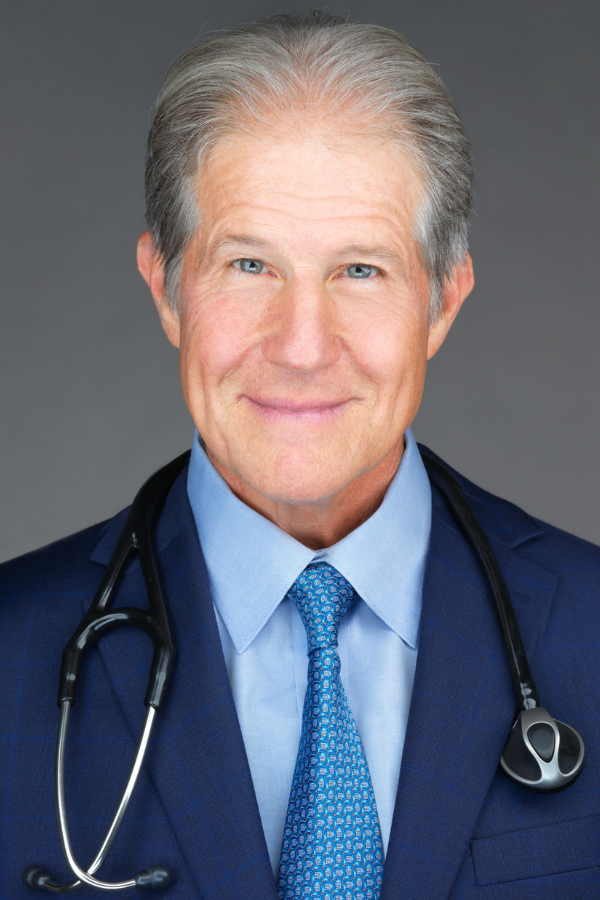
Wayne Jonas, MD
President, Healing Works Foundation
Wayne Jonas, MD, is a widely published investigator, practicing family physician, and professor of medicine at Georgetown University and at Uniformed Services University of Health Sciences. He is also a retired lieutenant colonel in the Medical Corps of the United States Army. Dr. Jonas was the director of the Office of Alternative Medicine at the National Institutes of Health from 1995 to 1999 and led the World Health Organization’s Collaborative Center for Traditional Medicine. Prior to that, he served as the director of medical research fellowship at the Walter Reed Army Institute of Research. He now advises national and international organizations on ways to implement evidence-based healing practices in their medical systems. He serves as the President of Healing Works Foundation.
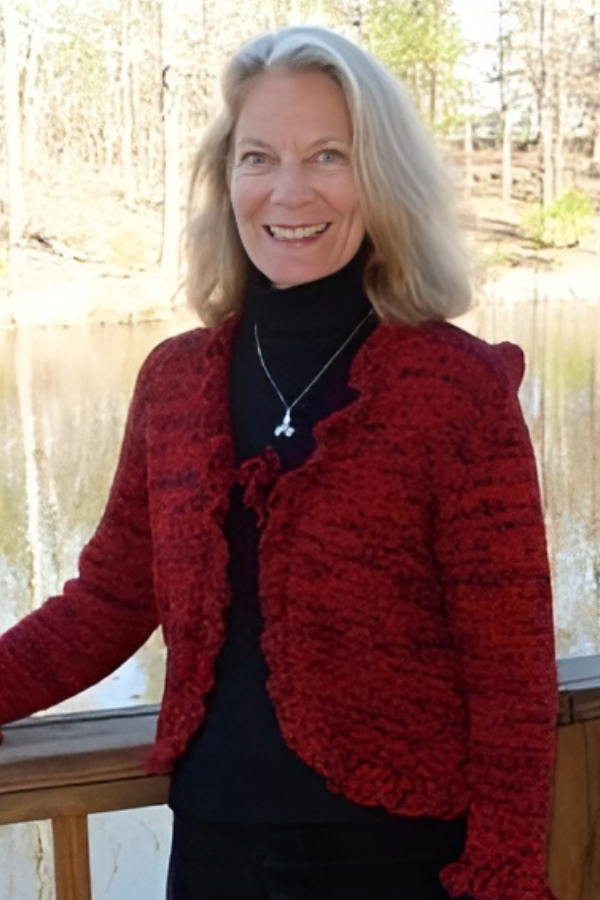
Margaretta McIlvaine
Intuitive Healer, Founder of Bridge Between The Worlds
Margaretta McIlvaine has been interested in energy healing modalities for over 30 years. Her approach to healing combines formal training from the Barbara Brennan School of Healing, the Virginia School of Massage, studies in acupressure, Buddhist practices and meditation, and Somatic Experiencing along with her own profound experiences of self-healing and self-transcendence. Her work blends subtle energy awareness, intuitive guidance and heart centered presence creating a space that assists others in peeling back layers to access their own innate wisdom. She also accompanies clients to surgery as an energy healer and assists in their after care. Inspired by her deep love of nature, Margaretta created Bridge Between The Worlds Retreat Center to offer sanctuary for healing and awakening which assists others to connect with the essence of spirit and intelligence in Nature and recognize the healing power of the natural world. At the center she conducts her own private practice and also offers a variety of programs on energy medicine, explorations of subtle energy modalities and meditation. In addition, she invites practitioners from the community to teach their own healing modalities. For more information please visit the website at bridgebetweentheworlds.org.
Join the Community
For exclusive access to the latest research, resources and stories transforming how we experience healing.
Phenomena – Episode 04
Original Airing: 6/23/2026
Produced by Sounds True Studios.
Music composed by Dan Baboulene.
“No One Left Behind | PTSD, Healing Touch, and the Military's Research Into Finding Relief”
MUSIC
Ron
Believe me when I tell you it was deep and dark and I'm not embellishing. One morning I started praying for Jesus to come get me. I'm not a guy to give up easy, and I begged him to come get me. It had gotten so bad. And all of a sudden I feel something real warm on my back like a hand. And then all of a sudden I heard a voice and it said, it's not your time.
Ivy Ross
We are in a time of convergence. Throughout history, almost every culture in the world has used what we now generally call energy healing to help ease suffering. But modern medicine pushed these practices, these phenomena, to the margins. And stories of energy healing became just that — stories.
I'm Ivy Ross, and as a business leader and artist, my life has always been about navigating these two very different worlds. The solid ground of hard data and the undeniable power of the invisible.
At heart, I'm a child of wonder. I'm curious about the forces that connect us all, and so I invite you to join me as I explore this new frontier in medicine and healing with astonishing stories, compelling science, and an open mind and heart.
This is Phenomena: The Science And Stories Of Energy Healing.
ACT 1
There's a kind of pain that doesn't show up on any scan. There's no bone to set, nothing surgery can fix, and medications come with an entire spectrum of unknowns and risks.
Even worse, it's not some rare unknown condition. An estimated 13 million Americans suffer from it, and it is notoriously difficult to treat with any kind of durability.
I'm talking about trauma, and more specifically, PTSD. As you would expect, the risk of PTSD for military veterans is significantly higher than for the general population. And today, we're going to hear the story of one Vietnam veteran's PTSD brought on by lung surgery later in life and a condition known as ICU delirium.
We'll also meet a physician and researcher who has conducted studies investigating the effectiveness of healing practices in the military, including healing touch for PTSD and a practice that's now known as battlefield acupuncture.
First, I want to provide a brief content warning.
This episode contains descriptions of wartime violence that might be disturbing for some. So please listen with caution and support, especially if you suffer from trauma or PTSD yourself. But it's important to tell this story as our guest told it, because his memories are the stuff of nightmares. For him, quite literally.
Meet Ron, a 79-year-old veteran who sat at his kitchen table and shared quite a story with us, all with a Southern charm that's hard to resist.
Ron
I was born in Mobile, Alabama in nineteen forty seven. I went to school in Louisiana. I went to three different colleges and I actually finished college when I was in the military.
I was an aircraft mechanic and I spent time in Thailand and Vietnam. I was there during Tet and during Tet, it was the worst battle of the Vietnam — biggest battle of the Vietnam War. It was kind of... they didn't win it, but it was kind of the beginning of the end for us.
Ivy Ross
As any veteran will tell you, serving is an incredibly proud and empowering path, but it's also a dangerous one.
Ron
I learned a lot in the Air Force. It was good to me. I don't begrudge going there. Things happen. It's a dangerous situation, even not in wartime.
I saw a lot of death. I saw an awful lot of death. Ron shared a number of his difficult military experiences with us. Times he responded to air crashes, fires, attacks, even leaking containers of Agent Orange. One late night rescue out of Vietnam was particularly gruesome. All the air rescues to the north came out of Udon, Thailand. And one of them came back one night and they landed that helicopter about two o'clock in the morning. The crew chief knew me and he jumped out the back and he goes, Ron, I need you to come help me. Biggest mistake I ever made. There was six guys in that helicopter. Only two of them were alive. You couldn't even tell they were men. They had so many bullet holes in them. So I'm helping him get one of the guys out of the back that we thought might still be alive and you had to be careful how you picked them up to keep them together.
There were things like that that went on my entire career in the Air Force. You could see that being a policeman. I don't think sometimes it's as devastating — what I had seen, but I'd seen quite a bit in the states. It wasn't all over there. And you know, maybe I don't know how to put this. You never get used to it. You know, you can handle it a lot better from time to time, but —
Got out of the service, opened my own business, and I've done well for myself. I'm not rich but we funded our grandchildren's colleges and I've been able to help other people.
Ivy Ross
Ron's experiences in the military stayed with him for decades, difficult but manageable. Until his late 60s when he faced a critical health challenge. Ron suffered respiratory failure from emphysema, asthma, and Agent Orange exposure, and he needed a bilateral lung transplant. And while this major surgery itself was a success, something unexpected happened to him in the ICU.
Ron
After this operation, I was having the nightmares in ICU. They have an ICU pod and once you're not critical anymore, they put you back there and there was about 11 other people back there and I saw seven people die that I was sure of. I would have nightmares that I didn't know were real. I didn't know whether they were real or not.
Ivy Ross
Ron began to suffer from a condition called ICU delirium, also known as ICU psychosis. ICU delirium affects roughly one out of three patients in intensive care and can result in disorientation, hallucinations, and paranoid delusions.
Ron's extended stay in the ICU, along with several other risk factors, including his age and being an organ transplant recipient, made him especially vulnerable. And once it started, things only got worse.
Ron
One of the side effects of psychosis, after extended time of five days, you start pulling tubes out. And guess what? They tie me to the bed and I'm claustrophobic. So I laid in there for seven days, tied to a bed and I can't move. And that went right into my dreams. Went right into my dreams.
I'm having these horrific nightmares. I mean, they're dark. You can't wake yourself up. And then you start wondering whether is this real or what is this? And you think you get used to it. I'm sorry, you don't. Those nightmares went on 24/7 to begin with, for nine days... and it went on for seven years.
Ivy Ross
Seven years. Not all of Ron's nightmares were about the war. They were more like delusions that fused together his present situation with past horrors.
He even dreamt he was a POW even though he never had been one, and brought his son into that nightmare too.
Ron
My son said — he was saying, he told me this later — he goes, you remember having a nightmare about bamboo? I said, yeah, I dreamed that two guys were beating me with bamboo and I was bleeding all over and beating my legs, beating my back, beating my front. And he goes, yeah, I know. I said, how do you know? He was yelling at me to run.
It was very easy for me to work people into those nightmares, especially if they were talking to me — and somebody was always dying, somebody was getting mutilated or my family was being killed. I did better with stuff happening to me other than my family or friends or what have you.
Ivy Ross
Ron's life became an unending nightmare. Imagine that your enemy, something that's hunting you day and night, bent on your destruction, isn't on the battlefield, but in your own mind. Imagine sleep itself becomes terrifying.
Ron
When I got home, that's when I started only sleeping four hours a night, because as soon as I could wake myself up — which wasn't easy — I'd wake up and I'd stay up. I was afraid to go to sleep. Because I knew I was gonna go to sleep and I was gonna have one of these nightmares. And believe me when I tell you it was deep and dark and I'm not embellishing.
One morning I started praying for Jesus to come get me. I'm not a guy to give up easy, and I begged him to come get me. It had gotten so bad. I said, please come get me, please. I'm laying there and all of a sudden I feel something real warm on my back like a hand. And then all of a sudden I heard a voice and it said, it's not your time.
And the lady that's in this podcast with us, I think Jesus sent her to me if you want to know the truth about it. He waited a while but he sent her.
Ivy Ross
The lady Ron is mentioning is Margaretta McIlvaine — Maggie — an intuitive healer for many years and founder of the Bridge Between Worlds Healing Center in Virginia. As Ron told his story, she listened and nodded. And when it was her turn to talk, the first thing she said wasn't about herself.
Maggie
First of all, thank you for having us on your program.
Ron
Thank you.
Maggie
It is really, really an honor. And one of the things that I just want to add is that I just felt that the story that Ron's sharing and the journey that we had together, if it can help other people, that's the main thing.
Ivy Ross
Like many in her field, Maggie's first experience with healing was as a patient.
Maggie
I first got started in my interest when I moved out to California to go to college and I met some really amazing people there and some teachers who began to teach about the energy field and energy medicine, and I had never heard a thing about it because I grew up in southwestern Pennsylvania, so it was all quite new.
And I had a bit of a rough childhood and these experiences I had with energy healers that helped me go into deeper parts of myself and face things that I hadn't been able to process — or sense, feel — that absolutely made a huge difference and I sensed the power of the work and I kind of knew intuitively this is a path I wanted to get more acquainted with and to learn more.
Ivy Ross
Maggie is trained and certified in several overlapping therapeutic practices. Some of them are conventional, like healing massage, and some are more unique to the field of energy medicine, like Reiki, Integral Hatha Yoga, and Barbara Brennan. There's more about that on our site at phenomenahealing.com.
Maggie
I went to the Barbara Brennan School of Healing and I did massage at the same time, so I'd have a license to touch. Barbara Brennan is a gift to this field, and she really did a beautiful job in organizing a four-year curriculum that assisted people to deepen their own skills and their own self-healing, and then move into these different levels of the classes to begin to kind of learn — how do I say? It's sort of like inner navigation. So you do it with yourself.
And then when we would practice on different clients, and I'm going to open my practice, there's some kind of skill that came forward where I could connect with someone in a very open and trusting way and kind of journey with them into their subconscious.
Ivy Ross
We'll hear more about how a confluence of therapeutic approaches like this can be effective when we talk to Dr. Wayne Jonas about his research in just a bit. But for now, think of it as a holistic container of healing that practitioners like Maggie help create, what she and others call integrative energy medicine or therapy.
Maggie
So there's a lot of things that have integrated, and I'll share what a session looks like to give an idea.
Sometimes people will have a very clear intention of what they would like. Sometimes people don't know. And so when we come together at first, we talk for about 20 minutes or so, and in that conversation often people will come — I thought I came for a certain reason and now that I'm here, it's not that reason at all.
So we really wait for the moment because it's actually like holding sacred presence and deep listening, and that's the energy that we're surrounded with. So the room actually begins to hold a really beautiful presence, and in that healing presencing, more is able to safely come forward from a client than they might not feel safe to share. And it's in that sharing that we then land together on what it is that they truly do need, what their soul has been asking for. And I am intuitive enough that I feel the moment when, ah, that's it. We've landed on the truth of why you're here and how I can best serve you.
Ivy Ross
That exploration is the first step, which is both a diagnostic tool and at the same time a way to create a safe space, what Maggie calls a healing presencing. After that, she moves into more active healing.
Maggie
So after we get that part clear, then we do the energetic work on the massage table, and it's that piece — then whatever insights or ahas or things that they realized in our talking, that's when we can really allow the energy system to kind of release blocked energy that's in different chakras.
And then it all begins to get more cleansed and cleared and come back into a harmonious whole. So that's the energy piece that we do after clarification.
Often it's like holding someone's hand as they're needing to kind of face something that's too scary to do it by themselves, but they can feel an energetic presence. And I feel that so much in what happened with Ron and I. Because he was so open and he was so open to heal. And so when we began our work together, he was really open to allowing that kind of joint journey, and in that journey, as he was telling his story, I could feel that he was deepening into the healing space. And as he was deepening into the healing space and shifting, I was too, and then we both were able to just keep going through the whole process. So that's a piece of what was deep with our work.
Ivy Ross
Ron found Maggie through family, not because he was looking for a healer or even believed in anything called energy healing, but because his family knew he was suffering.
Ron
See, I really wasn't into any of that. But I'm to the point in my life now, I'll do anything, I'll try anything within reason.
You know, I tried so many different things and she never said it, but everybody said, we're gonna help you. Heard that at the Mayo Clinic and guess what, they didn't help.
Ivy Ross
Ron was open but skeptical, and because their session was going to be long distance, just talking on the phone, he probably figured why not give it a try.
As a reminder, many healers we've talked to, including Maggie, do both in-person and at-a-distance healing sessions, with tangible results either way. So how does that change her second step when she would normally get her patient onto a massage table?
Maggie
What occurred with Ron — we are long distance on the phone and we didn't get on the table, but somehow holding that sacred space for him and being with him in the telling of this very difficult story and the pain and tragedy he was in. Really, it was like a deep trauma. Somehow non-locally, the energy that was being held for us in that space continued to allow him to feel a release and to feel some of the tightness that was held — or release a lot of the fear and — how do I say? His nervous system was kind of on fire, to never really be able to relax. But we could kind of feel that beginning to lift up and off.
Ron
I was actually sitting on my patio and I had my eyes closed, but it was instant relief. That's what I felt like. It was truly relief. I was totally relaxed. I know you're going to think I'm nuts, it kind of scared me. It really did. It's not just really a conversation that you take — it's a trip you take together. It's a journey. We're talking to each other and she took me down a path I'd never been down before. I didn't even know it existed.
Towards the end of our conversation I realized I wasn't alone anymore, and I never knew I was alone. I've been alone by myself for a long, long time.
It's bad enough to be alone. It's really worse when you don't even know it. You have no idea. I was at peace — truly, for once I was at peace.
Maggie
And he said to me, he said I was exhausted after that session. So it's like that feeling when you're carrying tons of wood or big things of concrete. It's when you put them down that you actually feel the relief and the release and the exhaustion of holding it. And sometimes after a session, people will need to rest for a few days. But a lot of the old faulty belief systems or levels of fear that have kept them blocked, those are the things that get released and open.
And then it's like the intelligence of the system, the intelligence that's already there — it comes forward and begins to create that harmony. So I am not really doing anything with anyone. I'm really like a facilitator to help them walk through that door and then bring them back online and connect to their blueprint.
Ivy Ross
This reintegration with the blueprint, or the intelligence of the system, is something I've heard a lot from healers. It's a belief that there is a natural order or balance that's being disrupted, and that energy healing's mission is to remove energy blockages and allow the patient to reconnect and reintegrate with this harmonious state.
Which is where Ron found himself after his session with Maggie.
Ron
It was probably one of the happiest days of my life. Not only was I happy about what she was doing, I had no idea that that night I was never gonna have a nightmare again.
That happened that very night. And what was I doing? I was in my room going, I'm gonna go to sleep — I'll stay up a little bit longer so when I wake up it won't be two o'clock in the morning, it'll be four in the morning — but I haven't had a nightmare since. I know that sounds ridiculous, but evidently whatever button she pushed it was the right one.
Ivy Ross
It's been a year and a half since Ron's healing session, since he's had a nightmare. After so many years of suffering, he was at peace. And when she heard Ron express his joy at being healed, this is what Maggie had to say.
Maggie
I just emptied for a moment because I am so glad to hear that. I'm honored to hear that and I'm so aware that I was a facilitator, and that I was a messenger, and it wasn't me. That's what I'm really feeling. But I am absolutely so deeply, deeply grateful that however this works, this person who didn't deserve to suffer one more day was relieved. And just to share — this is so fascinating that we're doing this today in podcast. After that session, I have notes that I took and I said, I would like to tell this story. This story needs to be told.
Ivy Ross
I would add not just a story that needs to be told, but a story that needs to be heard. Listened to, believed. Because both Ron's pain and his peace deserve it.
ACT 2
Ivy Ross
Next, I want to bring in an expert in integrative health who has studied the effects of healing practices on PTSD in the military.
Wayne Jonas, M.D.
I'm Wayne Jonas. I'm a family physician and the president of the Healing Works Foundation.
Ivy Ross
Dr. Jonas is a retired lieutenant colonel and former director of medical research fellowship at Walter Reed Army Institute of Research. He was also the first director of the NIH's Office of Alternative Medicine, and has written several books on integrative health and whole person care, including the bestselling "How Healing Works."
His work has set the bar for evidence-based research in the areas of pain, stress, and human performance, and the path that led him here started back when he was, as he likes to put it, an army brat with a dad who healed people in a way that surprised him as a child.
Wayne Jonas, M.D.
I didn't realize it, but my background as a child growing up really set me up for kind of looking at the whole world. I was an army brat and moved around every couple years and lived all over the world.
My father was a chaplain. He was a Presbyterian minister in the military, and he spent a good part of his time — especially during some of my formative years — working as a hospital chaplain. So he would go into the hospital and I would talk to him about it. He says, well, what do you do there? And he says, well, I help people heal. And I said, well, I thought that's what doctors did. And he said, well, I helped them heal a different part of themselves.
Ivy Ross
From an early age, Dr. Jonas learned that healing comes in many forms, sometimes physical, sometimes emotional and spiritual.
Wayne Jonas, M.D.
So that opened up my idea that there were different parts of selves. I was so curious about that, that even after I was accepted into medical school, during my last year of college, I decided to go and see what it was like to be a chaplain in a hospital.
Ivy Ross
He didn't stop there. Dr. Jonas also took a resident course in global healing that introduced him to healing traditions from around the world, and once he got to medical school, he came face to face with a very different approach to healing.
Wayne Jonas, M.D.
That was all before medical school. I guess I was a glutton for punishment, because when I went to medical school, none of that was mentioned either. And when I mentioned it, half the time it got me into trouble. So I had to learn how to navigate through our very narrow focus on healing in the west, realizing that there was this whole world out there that nobody was looking at, talking about, seeing, or investigating.
After medical school when I was in the military, I had a scholarship and went into the military where they did whole person care. I ran hospitals and clinics and had staff and our goal was not just to treat disease, it was to prevent illness, to manage chronic illness, and to enhance human performance, enhance functioning of people. So it was really about creating health. Not just treating disease.
Ivy Ross
But once again, Dr. Jonas was in for a shock. When he left the military and entered private practice, he found the same baffling and narrow focus he'd encountered in medical school.
Wayne Jonas, M.D.
I thought that's the way medicine was practiced everywhere. And when I got out, I said, what the heck's going on outside here? They're not really about helping people stay well or heal. They're really about playing whack-a-mole on the diseases as they pop up. And so ever since then, I've been trying to create systems that can insert whole person care into mainstream medicine at large, you know, beyond those kinds of organizations like the VA and the military and DOD and that kind of stuff.
Ivy Ross
Dr. Jonas has had an impressive career, heading some of the most impactful healthcare organizations in the country and the world, and advocating for exactly what he's described: an approach to healthcare that isn't just Whac-A-Mole, but a whole person focus on health and wellbeing.
Over the course of his career, Dr. Jonas has led and participated in literally hundreds of scientific studies on pain, stress, and resilience, especially as it pertains to military service.
There are two studies in particular that we'll explore today because they involve energy healing. But before we do, here's a question you might have. I know I did. Why is the military interested in something as, quote-unquote, "out there" as energy healing? It seems like a strange fit, doesn't it?
Well, not necessarily.
Wayne Jonas, M.D.
Something that people find surprising — and yet, if they know, they know the military is not surprising at all — which is, why would the military be interested in these things? Aren't these kind of touchy-feely and woo-woo and all that kind of stuff? And the answer to that is that the military and the veterans are interested in what works. They want to know what works, that is their primary driver.
I'm a family physician, primary care physician and ultimately, if it doesn't have utility in healing on the ground, in the clinic, I'm less interested in it. And the military and the VA are that way. They are there for the service member, the soldier, they're there for the veteran. And they don't have a lot of the commercial and theoretical conflicts that prevent so many other things from getting out into mainstream healthcare.
Ivy Ross
I had never thought of it this way. The military just wants to know it works. In previous episodes, we've met scientists who are searching everything from Petri dishes to universal consciousness for clues about how this all works and why.
When it comes to pain or PTSD, the military doesn't care how or why it works, just that it does.
Wayne Jonas, M.D.
I'll give you an example in the acupuncture field. So when I was at NIH, they did systematic reviews and critical evaluation of research. And so I asked them to do one on acupuncture.
And so they did their standard approach — they had a systematic approach to technology assessment — and came out with a report on acupuncture. And it showed clear evidence for some things that it worked for. Clear evidence for things it didn't work for. After that report came out I was asked to go and brief the institute and center directors at NIH about the results of the report. The only question I got afterwards in the whole thing was, well, how does it work? They were interested in their own theories about the mechanisms that were going on. So they wanted to know biochemically, how did it work.
And when I took that same information over to the military leaders in those areas, they said, God, can we use this? We have a lot of pain. In fact, it's the number one reason that service members can't actually do their job — is chronic pain. And if we had better ways of treating that.
Ivy Ross
At the time of that study, an Air Force oncology radiologist named Dr. Richard Niemtzow had developed a simplified system of acupuncture to treat pain and was seeing good results in his clinic.
Wayne Jonas, M.D.
Here was something that had widespread, potentially pragmatic, scalable use. Very easy thing to do. So the military asked us to use that and try to determine, did it work and could we train other people in it to use it literally on the battlefield or at least outside of the clinic.
Ivy Ross
They called it battlefield acupuncture, and the term stuck — no pun intended. Not just because it was a catchy name, but because it worked.
Wayne Jonas, M.D.
Not only did it work, but it was actually doable. It was trainable. And they said, great, we love it, we're gonna use it. They stuck it into the medical curriculum. They set up training programs to train all of their pain centers, and then all their primary care docs and then others in those areas. And last I heard there were over 6,000 people that have been trained in battlefield acupuncture. And you cannot graduate from the military medical school now — USUHS — without being certified in battlefield acupuncture. And now the VA is picking it up and using it regularly.
Ivy Ross
Those studies focused on pain and acupuncture, a physical symptom with a physical treatment. But what about Ron's experience with a condition of the mind like PTSD, and what I'd call a treatment of the spirit, like what he received from Maggie?
Again, Dr. Jonas has a surprising take on just how receptive the military can be to ideas like this. He told us the story of work he'd done with Herbert Benson, who was a Harvard Medical School professor and widely considered to be the father of mind-body medicine in America. He and Dr. Benson conducted a briefing at the Pentagon that took a group of military leaders through an exercise to demonstrate Dr. Benson's relaxation response techniques.
Wayne Jonas, M.D.
And everybody was quiet and they meditated and everything. And when they came out one guy said, okay, so what else is new? And they said, we use this all the time. We call it gut feeling. It's used all the time. They talk about it out in the field. There are certain people that just have this uncanny ability to kind of know where to go and what to do and how to survive. So they were very much interested in this because they weren't trying to test a theory. They were trying to test an application that in this case was a matter of life or death.
Ivy Ross
Tapping into the mind-body connection wasn't some esoteric thing for them. It was how soldiers stayed alive. And not just on the battlefield, but also when they came home and found themselves still fighting a war in their mind.
Wayne Jonas, M.D.
The other thing that was of great interest is mind-body medicine because PTSD, depression, these were things that people could be trained in.
They were things that a lot of military people were trained in. Especially some of the special forces and the elite military were trained really in emotional and mental control. So the whole mind-body thing was very familiar to the leadership.
War-related trauma — it's got similarities to sort of normal trauma that you have in civilian life. But there's a lot of differences too.
It's a lot more intense and if you've been in the middle of actual fighting and you've had people die that are your best buddies — and a lot of times right in front of your eyes — it's pretty intense. It creates a broad number of things in terms of depression, PTSD, anger and hostility, loneliness. This type of thing.
Ivy Ross
Treating trauma like PTSD is notoriously difficult. Many veterans actively avoid mental health care, and treatment dropout rates are staggeringly high, up to 54%. So even if someone does seek help, they're more likely than not to give up.
Dr. Jonas participated in another study with the military that addressed all of this head-on.
Wayne Jonas, M.D.
We wanted to really embed and really measure the types of things that military was interested in, and it is harder to treat. The standard approach at this time was exposure therapy, where they bring you in and they expose you to the trauma and then try to help your system calm down when that's happening, desensitize you to that. And that was one of the approved approaches. But we used a positive imagery approach — relaxation response — and training them to induce their own inherent relaxation response in that group. And it worked quite well. And that was with this imagery thing. So we adapted that to the Quantico study and paired it with the healing touch.
Ivy Ross
We'll get into the details of the study in a minute, which combined healing touch with guided imagery practices. But I want to highlight one thing I found fascinating about the study before it even begins. Because this wasn't mental therapy, there's less stigma attached to it — that mattered to potential participants.
Wayne Jonas, M.D.
I think a large part of it was that it avoided a stigma, right? I don't need to work in your head because you've got a problem in your head. I'm helping you to regain energy balance. And, energy balance for health and performance — that kind of thing. We get that, right.
That doesn't have the stigma that it's all in your head, which is actually a false stigma that's been created by the division between mind and body in the west. We think that there's a difference between the mind and the body in the west, even though the science shows it's not — it's absolutely not.
We've just got this myth embedded that creates a bias against something that doesn't look like it's part of the body or the brain. And so we've created this stigma, whereas energy balance — which in some ways may be more accurate actually — was, they were open to this kind of thing.
And so they were willing to get treated for energy balance.
Ivy Ross
One of the biggest hurdles in treating something like PTSD is participation, asking for help. This study leapt over that hurdle before there was even a single healing session.
Dr. Jonas and his team developed a study that balanced their desire to have significantly valid results with the military's need to treat active duty personnel quickly and get them back into action. What they built was a pragmatic randomized controlled trial, which is a study that evaluates the effectiveness of interventions in real-world clinical settings rather than ideal lab conditions.
Again, the military needed results, not theories.
Wayne Jonas, M.D.
And so we did a pragmatic study, which is — what does it look like compared to what normally they're getting. It's called treatment as usual. They were getting psychotherapy, they were getting a variety of things for stress, relaxation.
Some of them were getting exposure therapy. They were on medications. They were getting group psychotherapy. So it was sort of the best that the clinic had to offer for PTSD and we figured if we can up that — and we didn't take that away from those who got the healing touch, we simply added it to it — then we could compare that.
There were a lot of constraints to this because there was a lot of turnover and these people were getting redeployed, moving, doing other things in those areas. So we knew that we weren't gonna be able to have long-term follow up, but we wanted to see what can be done in this short period of time.
It had to be done over three weeks and I wanted to get as many doses in there as possible. And so it was done twice a week for three weeks. And that comes actually from the acupuncture research that shows, to induce a physiological endogenous opioid effect or relaxation and other kinds of effect, you need to have a repeated thing at a short period of time to really get it into the brain.
Ivy Ross
So this study compared the effectiveness of conventional treatment programs against those same treatments plus a combination of alternative approaches, starting with healing touch.
Wayne Jonas, M.D.
The healing touch induced a sense of relaxation, but then with the presence of another person — whether you believe in the inner energy transmission or not — deepens that relaxation. It's having somebody there present with you, helping you to get into that space, helping you relax and feel, allows you to deepen your relaxation. And believe me, these soldiers have a hard time relaxing.
Ivy Ross
This reminded me of how Maggie created a safe space that allowed Ron to open up to the potential for healing. Whether she's doing this in person with healing touch or at a distance, creating this container of healing seems like it's a key component of Maggie's work, and for every other healer we've talked to.
The study combined healing touch with a guided imagery exercise aimed at deep relaxation, almost like self-hypnosis. Participants repeated that exercise every day as a way to condition their minds.
Wayne Jonas, M.D.
So you pair the deep relaxation with the imagery and then you repeat it. It's just like Pavlov's dogs, right? Standard classical conditioning. We were training their physiological system how to do this on their own with this signal — which was this imagery signal. And so it was combining these four things in those areas, and I think this is why it worked so well. It worked tremendously. It had a huge effect size in a short period of time.
Ivy Ross
The study measured average scores before and after treatments using a gold standard clinical measure called a PCL or post-traumatic stress disorder checklist.
Wayne Jonas, M.D.
The average to actually classify you as PTSD has to be above 50. The average on this was above 50. And below 50, they questioned whether you actually had it. And the average went way down to 40. So it was significantly below PTSD levels at the end of three to four weeks.
Ivy Ross
The PCL scores of the group that received only standard treatments went down slightly from about fifty-five to fifty-two. But the group that also received healing touch and guided imagery dropped from fifty-four to forty — three to four times the decrease of the standard group.
And although the study was brief, Dr. Jonas points to the sample size and the statistically significant decrease as proof it worked, and it worked well.
Wayne Jonas, M.D.
So we were able to get a pretty good sample size — over a hundred, 123 I think eventually got enrolled in it. And it allowed us to randomize and most importantly, to compare: did the randomization work? Did we actually get comparable groups? Can we say they all started from the same starting line?
And the answer is yes, it worked really well. Very comparable groups in terms of the makeup of the two populations, in terms of their PTSD scores and their other depression scores. Very, very comparable in those areas. So we knew that any differences in effect we could be pretty sure was due to what we were doing, and not just regression to the mean or the fact that they were all getting these other things too.
Ivy Ross
Program dropout rates were vastly improved, too. Attrition in their group was only around 12%, compared to typical dropout rates of anywhere from 20 to 54%.
So this study proved that people suffering from PTSD were more likely to participate in a program centered on energy balancing, more likely to stick with the treatment, and more likely to see actual relief in the end. That's remarkable, and I find myself siding with the military on this one. I'm less interested in how all this works and simply inspired that it does.
One last thought from Dr. Jonas. He started on this path as a son following his Army chaplain father around the world, discovering along the way that healing was more than just fixing physical parts.
And yet, as he pursued a career of healing himself, he continually struggled against a medical community that seemed stuck in a mechanical paradigm. Fix the problem that pops up. Medical whack-a-mole. Unfortunately, he hasn't seen this improve over his decades of service. If anything, it's gotten worse.
Wayne Jonas, M.D.
Ultimately the long-term goal is that we want healing to be a routine part of what happens in healthcare. And most young physicians like myself and others, when they get in, they think that's what they're gonna learn. And it's what they want to be, right? They want to be healers in some way. And they're rapidly, rapidly dissuaded of that unfortunately, in the current training that we get.
In the Healing Works Foundation, I started to kind of get away from the discussion of complementary and alternative medicine and really to talk about what does it look like when you have a system that really focuses on how do we tap into the inherent healing capacity, which makes up 80% of how people get better. And we know that there's a ton of data to show that.
Medicine as it's currently delivered provides only about 20% of actual health. And so why are we not paying attention to the rest?
I see healing touch as a component of that. It is still seen as a modality, and it can be abused as a modality too. People can come in thinking they have a magic bullet, and not integrating it with the rest of the drivers of health that every individual might need, which can vary quite a bit, but still always have to be anchored in meaning and the spirit of the person.
Ivy Ross
I'll be right back with my cohost and friend, Meredith Sprengel.
ACT 3
Ivy Ross
Welcome, Meredith. I'm thrilled to be here with you again.
Meredith Sprengel
Hi Ivy, super excited for today. I think this episode has been really interesting.
Ivy Ross
I want to start with a very large number that Dr. Jonas threw out — 80%. He said 80% of how someone gets better has nothing to do with medicine. Is that the right way to say that? Because it surprised me, as Dr. Jonas is not someone that overstates things. Talk to me about that.
Meredith Sprengel
Yeah, it is an incredible figure. And what he's quoting is from a body of research called Social Determinants of Health Research. And yes, there have been studies that have demonstrated that a lot of your health and your healing comes from things that happen outside of the doctor's office or outside of the medical care system.
So that includes things like where you live, what you eat, your income, your education, your social connections, your relationship to your family, and also this sense of meaning and purpose. So Dr. Jonas isn't just throwing out a number — there's actually a lot of research that supports this idea that health and healing is not something that only happens in a doctor's office or in a hospital. This is a number that even the CDC has cited.
Ivy Ross
Another number that really stuck out to me is the dropout rate of 12% versus up to 54% in standard treatments for PTSD.
Meredith Sprengel
This is one of the lowest dropout rates that I have seen in studies that include participants with PTSD. There have been other studies called meta-analyses, where you take a whole group of studies that have looked at a disorder and different interventions to address it, and there are some interventions that have dropout rates upward of 40 and 50%.
And one of those is actually the most-used intervention for PTSD, which is exposure therapy. So seeing a number like 12.2% is very low. And I also would like to note that in this study, the treatment as usual arm had a dropout rate of 28.3%. So there was something that the healing touch and guided imagery arm was clearly providing for the participants where they kept coming back for those six sessions.
This was a very successful trial. I think if any other type of intervention had seen the type of reductions in PTSD, there would've been even a bigger fanfare, because you're seeing that people had an average of 55, which means they're scoring for PTSD, with that dropping 15% to a score of around 40 or so.
So these are incredible numbers over a six-week intervention, and you didn't see the treatment as usual group drop this low, nor did they reach the threshold where they didn't have PTSD. So this is a really fascinating study, and it would be really meaningful if you repeated this and there was more research done on what is happening when soldiers are provided this type of intervention.
Ivy Ross
I lived with a man for 13 years that had PTSD and refused... He took the standard treatment, and I tried to get him to do some alternative treatments, and he would not. I really wish — and we ultimately broke up because of his behavior based on PTSD — and I really wish we would've known this then.
This was many years ago. But what does a number like that actually tell us about fit between treatment and population?
Meredith Sprengel
That's another great question, Ivy. The way to see it is that the intervention was meeting them where they were at.
As you can imagine, when people have PTSD, there are a lot of barriers to care, right? Being able to get up in the morning is difficult, and being able to function day to day also prohibits people from maybe engaging in the treatment.
Ivy Ross
And you know, Dr. Jonas reframed Healing Touch as energy balance for health and performance, which I love that statement. And I know he did that to sidestep the mental health stigma for participants. But what's your feeling about — is there something real underneath that reframing beyond just the messaging?
Because I feel it rings true deeply when I hear that.
Meredith Sprengel
Yes. I think that the reframing was really smart in a number of ways. Like you said, not only was the intervention meeting people where they were at, but even that framing helps the soldiers or the veterans to be able to feel like when they enter into that room, they're not going to have to unpack everything that's happened to them.
Which is actually the adverse of what is happening in exposure therapy. They're trying to reexpose you to the stimuli in a way that you don't continue to respond with a heightened nervous system, and that perpetuates more symptoms. So yes, and also this energy rebalancing question, of course.
Actually, there's a lot known about how PTSD affects heart rate variability. It really decreases the heart's ability to adapt, which is also a marker of health. And so a good treatment over time — you'll see increases in heart rate variability, and that is in itself a balancing system in the body.
Ivy Ross
Yeah. Well, I was so surprised originally to hear that the military was open to these kinds of practices, but once Dr. Jonas explained it, I totally understood why, and I'm so glad that we can now talk about these studies because they're super important.
Meredith Sprengel
Yeah. And I think that especially in the wars in Iraq and the war in Afghanistan, you had what I think they called the polytrauma triad, which was chronic pain, traumatic brain injury, and PTSD. So a lot of veterans would come back with all three.
And that is a very hard triangle to treat. So they were open to a lot of different practices, and one thing that Dr. Jonas was able to do was to help facilitate these programs that the military was very interested in to help the soldiers and the veterans in a way that reduced harm, because a lot of times allopathic treatments might address one thing but might actually cause some more problems in another. And also help people feel like they could heal themselves in a way.
Ivy Ross
Yeah. So Dr. Jonas described conventional healthcare as Whac-A-Mole, which I can totally relate to. He describes how young physicians come into the practice, like he did, wanting to heal, and then they get molded by this system that's all about just fix what's broken and move on.
Meredith Sprengel
Yeah. I totally understand that visualization. Just from my perspective — and I am in a very particular situation — I do think it's changing. But I think we're at this acute point where diseases of lifestyle have dominated healthcare costs, right?
So chronic pain, mental health, trauma are all very hard to treat with the current allopathic model that thinks if you just tweak one particular area, then everything else will go away.
I just want to bring this up because last night I just happened to turn on YouTube and I saw this conversation with Gabor Maté, and I was thinking it was very interesting because it addressed a lot of what we're talking about.
The word trauma means wound in ancient Greek. So what is interesting about that is a wound that is not addressed manifests over time. It also made me think of all the research on chronic pain and knee osteoarthritis that says that if you had an adverse childhood event, you're nine times more likely to develop osteoarthritis.
And there's a lot of other research on adverse childhood events that demonstrates how these things that happen to us in childhood — that are usually psychological in nature, or even physical in nature — end up manifesting as other chronic diseases. So the Whac-A-Mole problem — that is just such a wonderful metaphor because what Dr. Jonas is talking about is that a lot of times just treating one symptom leads to another, or just treating one symptom ends up manifesting in another way. And what integrative health modalities do is they try to reconnect you with self and your community in a way that helps you heal yourself.
And I think a lot of us are starting to feel that a system that only treats our anxiety with a pill, or only treats our chronic pain with a pill, ends up creating more problems and a less connected and a less functioning society.
Ivy Ross
You know, talking about wound and trauma, let's talk about Ron because his story is so moving. I mean, first of all, his experiences in the military — as he said, he saw a lot of death — and he says the majority of his nightmares after the ICU weren't even necessarily from those military experiences, but they certainly played a role.
Meredith Sprengel
Yeah. And I guess that is kind of that open wound, right? Probably a lot of it wasn't addressed, and probably the healthcare system did address aspects of it, but he was never maybe able to fully integrate what happened to him. And trauma also disconnects us from ourself, right? So when you have these traumatic events, a lot of times you're battling yourself for years because you then have difficulty dealing with a lot of the problems and adversities that occur.
So when I heard Ron's story, I kept thinking of somebody who was in a battle with themselves.
Ivy Ross
Meredith, you're so right because I even saw this with the man I lived with. He had one trauma after another after another, and he would — as he said — put it in a box and put a lid on it, and the traditional method of opening that lid and revisiting all of that, he just felt he would explode.
But yet it's so important that we deal with these traumas because if not, as you say, they stay in our body and they come back and get our attention in terrible ways.
So Ron's healing — he wasn't looking for a healer. In fact, he was skeptical, but he was also at his end. I mean, it's really lucky that he was referred by his family to a healer and was open to it, because what a massive change. Years of suffering and nothing else helped him, but then Maggie opens this healing space for him.
Meredith Sprengel
One of the things that struck me the absolute most, Ivy, was where he said towards the end of the conversation with Maggie —
I think he said something like, "It's bad enough to be alone. It's really worse when you don't even know it." And that also sort of brought back to me not only this idea of what trauma is — a disconnection from self and the world — but also made me think about why healing is so powerful and why what healers say they do, which is this reconnecting and helping restore your blueprint of health and wellness and reconnecting you to the universe and to people, was also the experience that Ron had.
Ivy Ross
Yeah, Meredith, I love that you brought up Ron's sudden awareness of isolation during the healing. Is that something that often comes up in healing once it's begun?
Meredith Sprengel
Yeah, in all types. So in energy healing — you also hear people say this in psychedelics, in deep forms of meditation — that they didn't realize how disconnected they were from themselves, from the world, from some sort of larger universal energy or God, you might say. And a lot of times disease does arise from disconnection.
There's a lot of research on loneliness and how that is predictive of things like mortality and how social connections can decrease mortality. So within the healing framework and what energy healers would say is that what they are doing when they're delivering a healing is they're putting your body in a state to heal by reconnecting you to some sort of — like we've talked about — a God or a universal energy or life's purpose or the true meaning, and all that kind of the underlying message within that is the connection to all things, right?
That we are all connected and that there's some sort of universal meaning and purpose that brings us all together.
Ivy Ross
Yeah. And you know, that seems like such a simple concept, this idea of reconnection. I think it's a beautiful way to think about what healing does. So thank you for that.
Meredith Sprengel
Yeah. I always find it so meaningful when you get the opportunity to speak to people who've had healing journeys, and just how much we don't realize that the current framework disconnects us, in how just that recognition of remembering we're in this all together and we're all one, and we're maybe all reflections of that universal energy might be the core for not only healing ourselves, but our communities and, optimistically, maybe the world.
Ivy Ross
Yeah. I mean, we've made things so complicated, and actually they can be so simple.
Meredith Sprengel
It's just something that keeps ringing in my head — what makes energy healing one of those modalities that has some of the most promise for health and healing for those that are hopeless, is because it really does meet the person where they're at and it enables that person to feel, and reconnect to, some sort of love and light that they've been so disconnected from for
Ivy Ross
so long.
And most importantly, take an active role in that healing.
Meredith Sprengel
Yes. Because it won't stay. I think the data shows that. If those lessons aren't integrated, if there isn't some sort of practice that you engage in to keep it up —
Ivy Ross
Absolutely. Thank you, Meredith.
Meredith Sprengel
Thank you, Ivy.
Ivy Ross
Dr. Jonas entered the field of medicine with a mission to heal people. What he learned — what so many learn — is how to treat disease. Those aren't the same thing. Ron spent seven long years inside that gap, the gap between what medicine could fix and what he actually needed, and millions of others continue to suffer, stuck between broken and healed.
What closed that gap for Ron, what got him ready for healing, wasn't a drug or surgery. It was Maggie holding space for a story that needed to be told and listened to. Ron was finally able to put down the things he carried for so long.
He was no longer alone.
You can learn more about Maggie McIlvaine's work at bridgebetweentheworlds.com.
Dr. Wayne Jonas leads the Healing Works Foundation. You can find his work and the research he's described at healingworksfoundation.org. And if you want to go deeper into the research, we'll link to the published Healing Touch PTSD study at phenomenahealing.com.
Next time on Phenomena, we're going to go deeper into that space between healer and patient and explore what's happening between them.
We'll meet Laurie Nealon, a charismatic healer and energy medicine teacher, and a man she healed who then became a healer himself. We'll also hear from Harvard Medical School professor Vitaly Napadow about his fascinating research that investigates a phenomena called brain-to-brain concordance.
If this episode moved you or challenged you, share it with someone.
I'm Ivy Ross and this has been Phenomena: The Science and Stories of Energy Healing.

Phenomena Healing was created by the non-profit Merraki Media and the Subtle Energy Funders Collective to thoughtfully explore energy healing, using rigorous scientific inquiry, in an endeavor to help reduce suffering and promote wellbeing. "Merraki" is a Greek word that means “doing something purely for the love of it."
© 2026 Phenomena Healing